Few questions have followed humanity as persistently as this one:
What happens after death?
Does consciousness simply disappear when the body dies? Does something continue? Is there a soul that survives, or does everything come to an end?
For thousands of years, people have offered different answers. Some believed that a soul travels to another realm. Others argued that death is simply the end of existence.
The Buddha approached the question from a very different direction.
Rather than beginning with death, he began with the nature of experience itself.
More than 2,500 years ago, he asked a simple but profound question:
Can we find a self that never changes?
Our bodies change continuously. Thoughts arise and disappear. Emotions come and go. Even memories shift over time.
If everything we normally identify with is constantly changing, where is the fixed and permanent self we assume to be there?
The Buddha did not conclude that nothing exists. Instead, he pointed to something more subtle.
Life is happening.
Experience is happening.
But the owner of those experiences is more difficult to find than we often assume.
According to his teaching, much of what we call “self” is continually being constructed through our reactions to life.
We see something and immediately respond.
We desire.
We resist.
We cling to pleasure and push away discomfort.
Through countless repetitions of these reactions, a sense of identity gradually forms and reinforces itself.
This process was described as becoming—the ongoing creation of the person we believe ourselves to be.
This perspective also sheds light on the Buddhist understanding of rebirth.
Many people imagine rebirth as a soul moving from one body to another. Yet the Buddha often described it in a more subtle way.
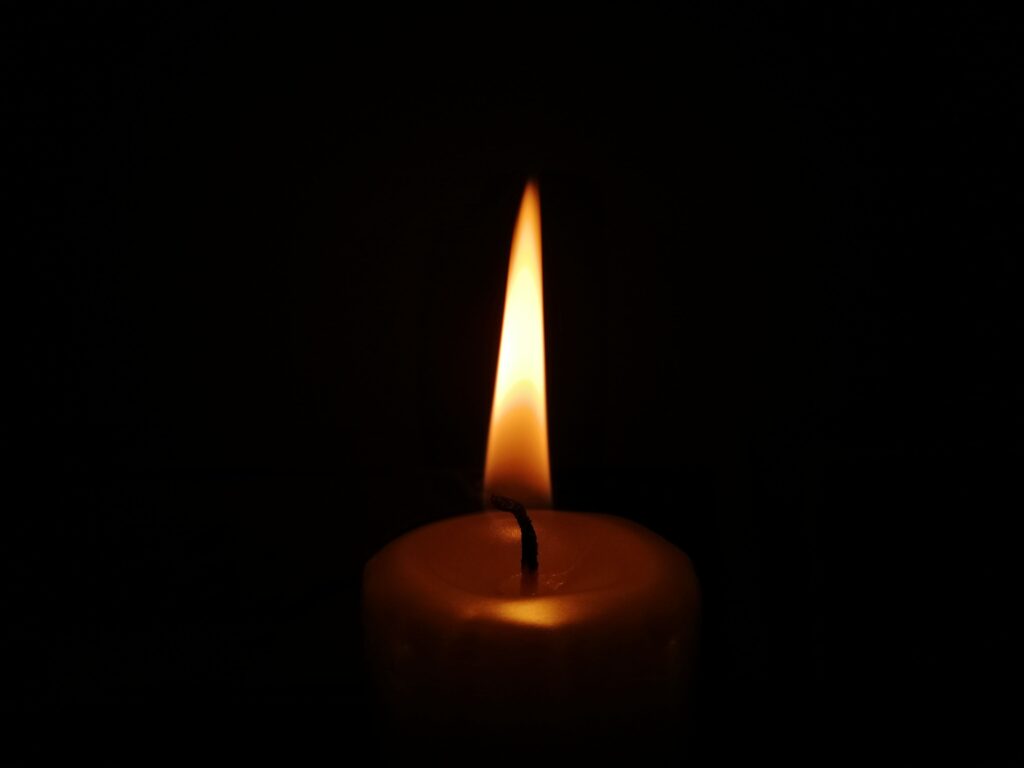
A traditional image compares it to one candle lighting another.
Is the new flame exactly the same as the first?
No.
Is it completely different?
Not entirely.
In a similar way, life continues through causes and conditions rather than through the transfer of a permanent self.
Patterns continue.
Habits continue.
Cravings continue.
Fear continues.
From this perspective, rebirth is not merely something that happens after death. It is happening constantly.
When anger takes over the mind, a new world of anger is born.
When anxiety dominates awareness, we begin living inside anxiety.
When craving becomes our master, we become the craving itself.
Each moment of identification creates a new version of who we believe we are.
This leads to a deeper reflection.
Perhaps the most important question is not:
“What happens after death?”
Perhaps the more immediate question is:
“What is happening right now that keeps creating the one who fears death?”
The Buddha did not offer detailed maps of the afterlife. Instead, he encouraged careful observation of the forces that shape experience in the present moment.
If those forces remain active, the cycle of becoming continues.
If they are deeply understood and released, something profoundly different becomes possible.
Whether one accepts these teachings literally or symbolically, they invite us to look beyond speculation and toward direct experience.
And perhaps that is where the inquiry truly begins.
Not with death.
But with this moment.
Watch the Video
This reflection is based on a video originally published on the Quiet Space YouTube channel.
Watch the full video here: