Tag: buddhism

  • If There Is No Soul or Self, How Does Karma Reach the Next Life?

    If There Is No Soul or Self, How Does Karma Reach the Next Life?

    A person dies. The body no longer moves, and the brain is no longer active. The memories, emotions, personality, and habits once expressed through that body can no longer be observed.

    Yet Buddhism teaches that this person’s story may not be entirely over. The karma created during that life, together with craving that has not been extinguished, is said to condition another birth.

    This brings us to a question that deserves more attention:

    “What carries the karma and craving of one life into the next? “

    If we say that a soul travels from one body to another, the problem appears relatively simple. The body dies, but the soul remains, carrying memories, tendencies, and the consequences of past actions into a new body.

    But Buddhism does not accept such an eternal soul or permanent self. The body is not an enduring self. Neither are feeling, perception, volitional activity, or even consciousness.

    Then what connects the life of one person to the life of a future being?

    Stating a Doctrine Is Not Explaining Its Mechanism

    When this question is raised, we often hear familiar phrases:

    • Karma does not disappear.
    • The stream of consciousness continues.
    • Cause and effect carry on.
    • Craving gives rise to renewed existence.

    These statements summarize Buddhist doctrine. But summarizing a doctrine is not the same as explaining how it works.

    To say that karma continues is to repeat the conclusion we are trying to understand. If karma survives death, what preserves it? If a stream of consciousness continues, what is that stream made of, and what allows it to persist after the body and brain have ceased to function?

    The phrase “causal continuity” raises the same difficulty.

    Continuity Within Life Is Not Continuity Across Death

    Within one lifetime, we can observe causes continuing into effects. Fear repeatedly experienced in childhood may influence behavior in adulthood. Thoughts and actions repeated over many years can become habits embodied in the brain and nervous system.

    Even if the process is not fully understood, there is at least a continuing organism through which those effects persist. A person may lose many memories, yet the same living body and nervous system remain across time.

    Death is different. The original body breaks down and its brain activity ends. If another life follows, that being is born with another body and another brain, perhaps in another place and to different parents.

    This is the decisive difference between continuity within one life and continuity across death. We cannot establish rebirth after death simply by pointing to cause and effect within a living organism.

    Showing that continuity without complete memory is possible is not the same as explaining how rebirth actually occurs.

    Karma and Craving Are Not Substances

    In the early Buddhist texts, karma is fundamentally defined as intention. Through intention, we act by body, speech, and mind.

    Karma is therefore not a dark substance stored inside the body, nor is it a score written in a cosmic account book. It is intentional action, said to produce consequences for later experience and existence.

    Craving is not a substance either. It is the movement of mind that wants a pleasant experience to continue, demands that existence take a desired form, or wants an unwanted reality to disappear.

    In dependent origination, craving conditions grasping, grasping conditions continued existence or becoming, and becoming conditions birth.

    But describing this conditional sequence is not the same as explaining how craving crosses the break of death and acquires causal power over another birth

    Three Problems Any Account of Rebirth Must Address

    Imagine two people. One spends a lifetime caring for others; the other repeatedly acts with cruelty. If Buddhism teaches that their actions lead to different results, then the difference between those two causal histories must somehow survive death.

    At least three problems must therefore be addressed.

    1. The Problem of Preservation

    What prevents the specific differences created by one life from disappearing at death?

    2. The Problem of Causal Connection

    When the deceased person and the newborn being share neither a body nor a brain, how does one causal history connect them?

    3. The Problem of Moral Attribution

    Why should the consequences of one person’s actions belong to one particular future being rather than to someone entirely unrelated?

    If the future being is the same person, what exactly remains the same? If it is not the same person, why should it inherit the consequences?

    Without answers to these questions, the statement that karma continues into another life may express a doctrine, but it does not yet explain a mechanism.

    Is the Consciousness the Same or Different?

    Some early Buddhist passages make the problem more difficult.

    On one hand, consciousness is said not to be a permanent self. The idea that one identical consciousness travels unchanged from life to life is explicitly rejected.

    On the other hand, another early discourse says that if consciousness did not descend into the womb, mind and body would not develop there.

    What, then, is the consciousness described as descending into the womb? Where did it come from? Is it the same consciousness as that of the previous life?

    If it is not the same, why does it inherit that life’s karma? If it is not entirely different, what establishes continuity between them?

    What the Candle Analogy Does Not Explain
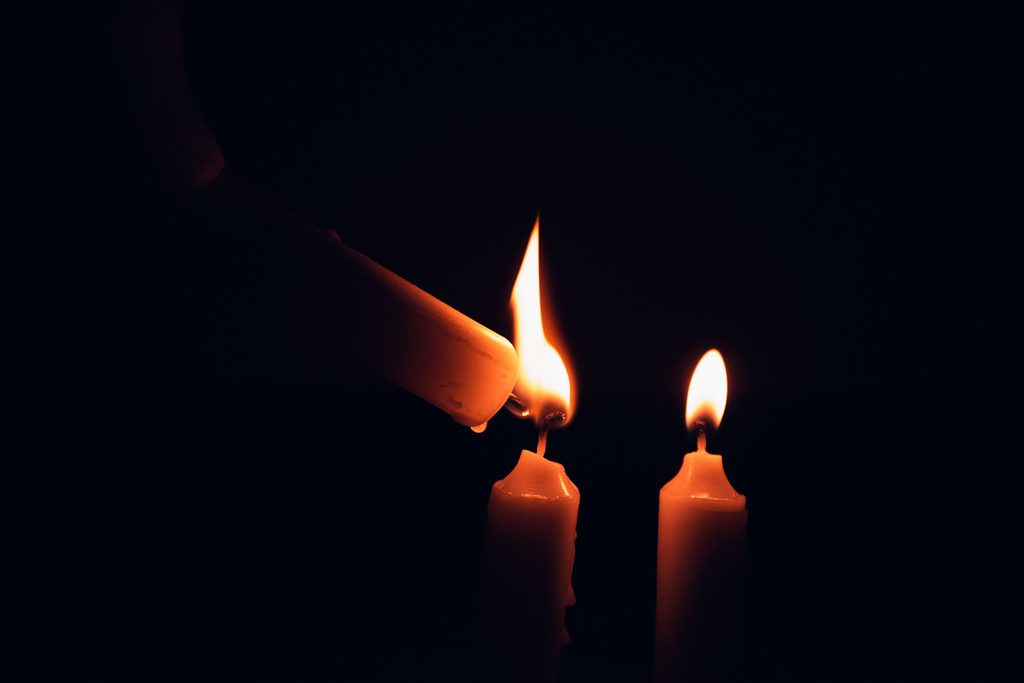
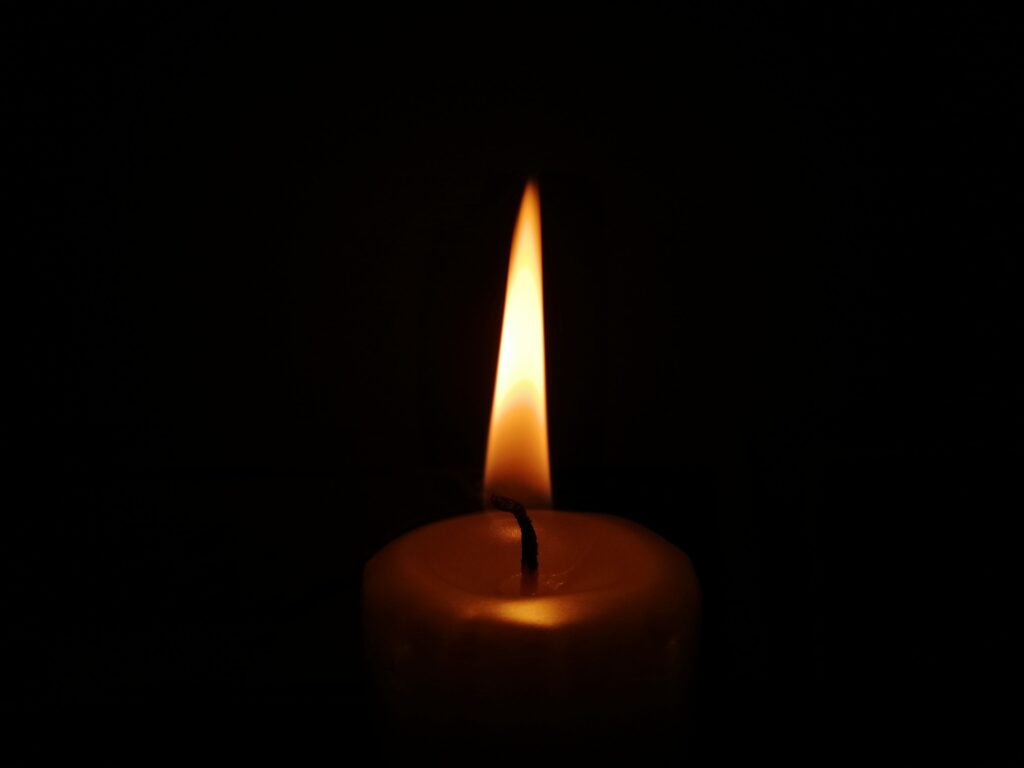
    One candle lighting another, illustrating causal continuity without a permanent substance

    Buddhist explanations often use the image of one flame lighting another. The first flame does not move as a whole into the second, yet without the first the second would not have arisen.

    The analogy helps us understand how causation might continue without a permanent substance passing from one place to another. But it only takes us so far.

    With actual candles, there is heat, fuel, air, and a physical process connecting the two flames. In the case of rebirth, the equivalent connecting process is exactly what we are trying to identify.

    Repeating the analogy does not reveal what happens between death and another birth.

    Why Later Buddhist Schools Proposed New Models

    Buddhist schools did not leave this difficulty untouched. Some traditions proposed an immediate causal connection between the final moment of one life and the first moment of the next. Some accepted an intermediate state between death and birth. One school spoke of a person to whom karmic consequences could be attributed. Later Buddhist traditions developed ideas such as karmic seeds and storehouse consciousness.

    The existence of these theories suggests that Buddhist thinkers themselves recognized how difficult it was to explain rebirth while denying a permanent self.

    We should not blend these models together and present them as one timeless Buddhist answer. We must distinguish what the early discourses actually say, what later schools added, which problem each theory attempted to solve, and what new difficulties it created.

    Leaving the Question Open Without Pretending It Is Solved

    What science has not verified is not automatically false. But neither is it automatically true.

    We do not need to assume that rebirth is impossible. Nor should we assume that it is established fact simply because a scripture affirms it.

    We can leave possibility open without turning possibility into evidence. We can respect faith without presenting faith as established knowledge. And we can admit when a mechanism remains unknown.

    Buddhism teaches that karma and craving condition another birth. Then how is that conditioning preserved? What allows it to cross the break of death? And why are its consequences attributed to one particular future being?

    Until these questions are answered, “rebirth without a soul” should not be treated as the conclusion of the inquiry. It should be where the inquiry begins.

    In the next article, we will examine Buddhism’s most fundamental response: dependent origination. How much does the statement “when this exists, that comes to be” actually explain about the mechanism of rebirth—and where does it leave another unanswered question?

    Early Buddhist Texts Referenced

    • Anguttara Nikaya 6.63: karma defined as intention
    • Samyutta Nikaya 12.2: craving, grasping, becoming, and birth
    • Samyutta Nikaya 22.59: the five aggregates and not-self
    • Majjhima Nikaya 38: rejection of one identical consciousness migrating through lives
    • Digha Nikaya 15: consciousness, name-and-form, and descent into the womb

    📺Continue the reflection in the full video on our YouTube Channel Quiet Inquiry.

    ← Back to Reflections Archive

  • A Story About Consciousness, Death, and Becoming

    A Story About Consciousness, Death, and Becoming

    For thousands of years, humanity has searched for answers to one profound question:

    What happens after death?

    Some traditions speak of an eternal soul. Others believe that everything simply disappears.

    Early Buddhism offers a remarkably different perspective.

    Instead of asking where consciousness goes after death, it invites us to look more closely at how consciousness is continually shaped in every moment of life.

    Every attachment leaves a trace.

    Every fear strengthens another habit.

    Every act of kindness changes the mind.

    Every moment of awareness opens another possibility.

    Perhaps becoming is not something that begins after death.

    Perhaps it is happening right now.

    This changes the way we understand life itself.

    Instead of asking only what happens after death, we begin asking:

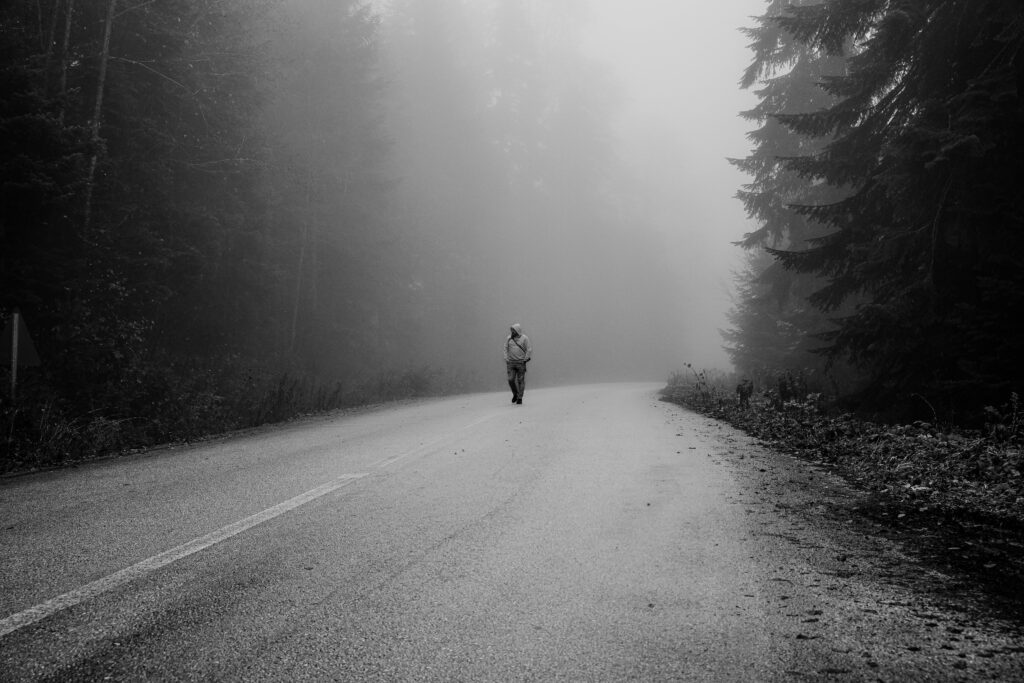
    A solitary figure walking through morning mist, symbolizing the quiet journey of consciousness, change, and becoming.

    Who am I becoming in this very moment?

    The Buddha repeatedly turned attention away from speculation and toward direct observation.

    Observe the mind.

    Observe attachment.

    Observe craving.

    Observe fear.

    Not to judge them—but to understand them.

    Because understanding changes the direction of consciousness.

    Perhaps freedom is not somewhere else.

    Perhaps it begins the moment the mind no longer needs to cling.

    The mystery of consciousness remains.

    Science continues exploring.

    Philosophy continues asking.

    Meditation continues observing.

    Perhaps no single tradition possesses every answer.

    Yet together they remind us of something deeply human:

    Right now, we are always becoming someone.


    Watch the Full Reflection

    🎧 Watch on YouTube:


    This Quiet Reflection explores consciousness, becoming, awareness, attachment, and the quiet transformation of the human mind through calm narration and reflective atmosphere.


    ← Back to Reflections Archive

  • Brain vs Consciousness: What Buddhism and Neuroscience Still Cannot Fully Explain

    Brain vs Consciousness: What Buddhism and Neuroscience Still Cannot Fully Explain

    For centuries, human beings have tried to understand one of the deepest mysteries of all:

    Consciousness.

    Today, neuroscience studies consciousness through observation, measurement, and experiment.

    More than two thousand years ago, Buddhism approached the same mystery in a very different way.

    Not through machines.

    Not through laboratories.

    But through direct observation of the mind itself.

    At first glance, these two approaches seem completely different.

    Yet some of their conclusions are surprisingly close.

    Modern neuroscience increasingly suggests that the self is not a fixed entity.

    The brain is constantly changing.

    Thoughts change.

    Memories change.

    Emotions change.

    Even our sense of identity changes over time.

    What we call “self” appears less like a permanent thing and more like an ongoing process.

    This idea may sound familiar to students of Buddhism.

    The Buddha repeatedly questioned the existence of a permanent self.

    If the body changes,

    if feelings change,

    if thoughts change,

    what exactly remains unchanged?

    Both neuroscience and Buddhism point toward a similar observation:

    The mind is dynamic.

    Experience is constantly unfolding.

    And what we call identity may be far less solid than it appears.

    There is another fascinating overlap.

    Both recognize the power of habitual patterns.

    Neuroscience speaks of neural pathways.

    Buddhism speaks of conditioning, craving, and attachment.

    Different languages.

    Yet both suggest that repeated patterns shape the way we experience reality.

    But despite these similarities, a major difference remains.

    A person quietly watching the night sky over the ocean, reflecting on the mystery of consciousness.

    Neuroscience generally assumes that consciousness depends upon the brain.

    When brain activity ends, consciousness ends.

    At least, that is the dominant scientific view today.

    Early Buddhism approaches the question differently.

    The Buddha did not clearly define consciousness as simply a product of the brain.

    Nor did he fully explain what happens after death.

    Instead, he left certain questions unanswered.

    Not because they were unimportant,

    but because he believed they did not lead directly to the end of suffering.

    As a result, the relationship between consciousness and the brain remains an open question in this conversation.

    And perhaps this is where both traditions become most interesting.

    Despite extraordinary advances in neuroscience, consciousness remains one of science’s greatest mysteries.

    How does subjective experience arise?

    Why does awareness exist at all?

    How does matter become experience?

    No one fully knows.

    The mystery remains.

    Perhaps Buddhism and neuroscience are not opponents.

    Perhaps they are exploring the same landscape from different directions.

    One studies consciousness from the outside.

    The other studies it from the inside.

    And maybe both perspectives still have something important to teach us.

    Because consciousness may be humanity’s most unfinished question.


    Watch the Video


    ← Back to Reflections Archive

  • The Buddha Refused to Explain the Afterlife — Here’s Why

    Many people assume that spiritual teachers have clear answers about what happens after death.

    Yet the Buddha often refused to answer questions about the afterlife.

    Was there existence after death?
    Did consciousness continue?
    Was there rebirth?

    He remained silent.

    At first, this may seem disappointing. Why would one of history’s greatest spiritual teachers avoid such important questions?

    The Buddha explained that speculation about what cannot be directly known often distracts us from the suffering and confusion that exist here and now.

    He compared it to a person struck by a poisoned arrow who refuses treatment until every detail about the arrow and the archer is explained. By the time all the answers arrive, it may be too late.

    A white cloud floating in the blue sky, symbolizing the fleeting nature of thoughts and speculation.

    What mattered most to him was not satisfying curiosity about the unknowable.

    What mattered was understanding suffering, seeing reality clearly, and awakening to the nature of our experience.

    This does not mean the Buddha denied the possibility of rebirth or continued existence.

    Rather, he emphasized direct understanding over philosophical speculation.

    His teaching was not focused on constructing a theory of the universe.

    It was focused on awakening.

    Perhaps the most important question is not what happens after death.

    Perhaps it is whether we are fully awake to this moment.

    Watch the Video

    This reflection is based on a video originally published on the Quiet Space YouTube channel.

    Watch the full video here:


    ← Back to Reflections Archive

  • Why the Final State of Mind Matters in Buddhism

    Person walking alone toward the horizon at sunset

    Many people wonder what happens in the final moments before death.

    Does the last thought matter?

    Can the final state of mind influence what comes next?

    Early Buddhism approaches these questions in a subtle and thought-provoking way.

    Rather than viewing death as a sudden event, Buddhist teachings describe consciousness as an ongoing process. Moment after moment, the mind reacts to experience through desire, fear, attachment, memory, and habit.

    From this perspective, the final moment of life is not separate from the rest of life.

    It reflects the patterns that have been repeated again and again over many years.

    This idea is central to Buddhist psychology.

    The mind is not seen as a permanent self.

    It is a dynamic process continually shaped by conditioning.

    A fearful mind tends to return to fear.

    An attached mind tends to return to grasping.

    An angry mind easily returns to anger.

    The mind naturally leans toward what it has practiced most often.

    For this reason, the final state of consciousness is not viewed as random.

    Nor is it a single moment of judgment.

    It is the continuation of a direction that has already been established.

    This helps explain why Buddhist practice places such emphasis on awareness in daily life.

    Person practicing mindfulness meditation outdoors

    Observe thoughts.

    Observe desire.

    Observe fear.

    Observe attachment.

    Not because these experiences are wrong, but because understanding them changes our relationship with them.

    Whatever we repeatedly cultivate gradually becomes the landscape of the mind.

    Fear strengthens fear.

    Attachment strengthens attachment.

    And awareness strengthens awareness.

    Seen in this way, the question of death becomes inseparable from the question of how we live.

    The final moment may not be determined by what happens at the very end.

    It may reflect what has been practiced throughout a lifetime.

    Buddhist teachings take this insight even further.

    They suggest that when craving and attachment are completely understood and released, the cycle of becoming itself comes to an end.

    Whether one accepts this literally or symbolically, the teaching points toward a deeper inquiry.

    Perhaps the most important question is not:

    “What will happen when I die?”

    Perhaps the deeper question is:

    “What kind of mind am I building right now?”

    Because the final moment of consciousness may simply reveal the direction the mind has been following all along.


    Watch the Video

    This reflection is based on a video originally published on the Quiet Space YouTube channel.

    Watch the full video here:


    ← Back to Reflections Archive

  • What Happens to Consciousness Right Before Death?

    Person walking alone along a quiet path

    Death is often imagined as a single event.

    A final moment.

    A dividing line between life and whatever comes next.

    But early Buddhist teachings invite us to look at death in a very different way.

    Rather than focusing on dramatic descriptions of the afterlife, the Buddha directed attention toward something much closer: the workings of consciousness itself.

    What happens to the mind when life comes to an end?

    According to Buddhist thought, the final moments of life are not separate from the rest of our experience.

    They are deeply connected to the habits, reactions, attachments, and fears that have been cultivated throughout a lifetime.

    The mind does not suddenly become something different at death.

    It tends to continue moving according to familiar patterns.

    This perspective rests on a fundamental Buddhist insight.

    Consciousness is not viewed as a permanent soul or fixed identity.

    Instead, it is understood as a dynamic process shaped by causes and conditions.

    Moment after moment, the mind reacts.

    It grasps.

    It resists.

    It desires.

    It fears.

    And through these repeated patterns, our experience of reality is continuously shaped.

    From this perspective, death is not entirely separate from life.

    It is the continuation of the same momentum that has been operating all along.

    If the mind has spent years caught in craving, fear, resentment, or attachment, those tendencies do not simply disappear in the final moment.

    But if awareness has been cultivated, the structure of experience begins to change.

    This helps explain why Buddhist practice places such importance on observation.

    Person sitting quietly in meditation

    Observe the breath.

    Observe sensations.

    Observe desire as it arises.

    Observe fear.

    Observe attachment.

    Not to suppress them, but to understand them.

    The Buddha taught that much of human suffering is not created by external circumstances alone.

    It is generated internally through automatic reactions that operate beneath conscious awareness.

    Attachment was often compared to fuel.

    The more tightly the mind clings to identity, memory, desire, and fear, the more the cycle of becoming continues.

    This leads to a profound question.

    What if the most important preparation for death is not something that happens at the end of life?

    What if it is happening right now?

    Every moment of unconscious craving strengthens old patterns.

    Every moment of awareness weakens them.

    This is why mindfulness was never intended as mere relaxation.

    It was a way of seeing the machinery of suffering directly.

    And according to Buddhist teaching, freedom begins when that machinery is finally understood.

    Perhaps the question is not only what happens at death.

    Perhaps the deeper question is:

    What kind of mind are we building in this moment?

    Watch the Video

    This reflection is based on a video originally published on the Quiet Space YouTube channel.

    Watch the full video here:


    ← Back to Reflections Archive

  • What Happens to Consciousness After Death?

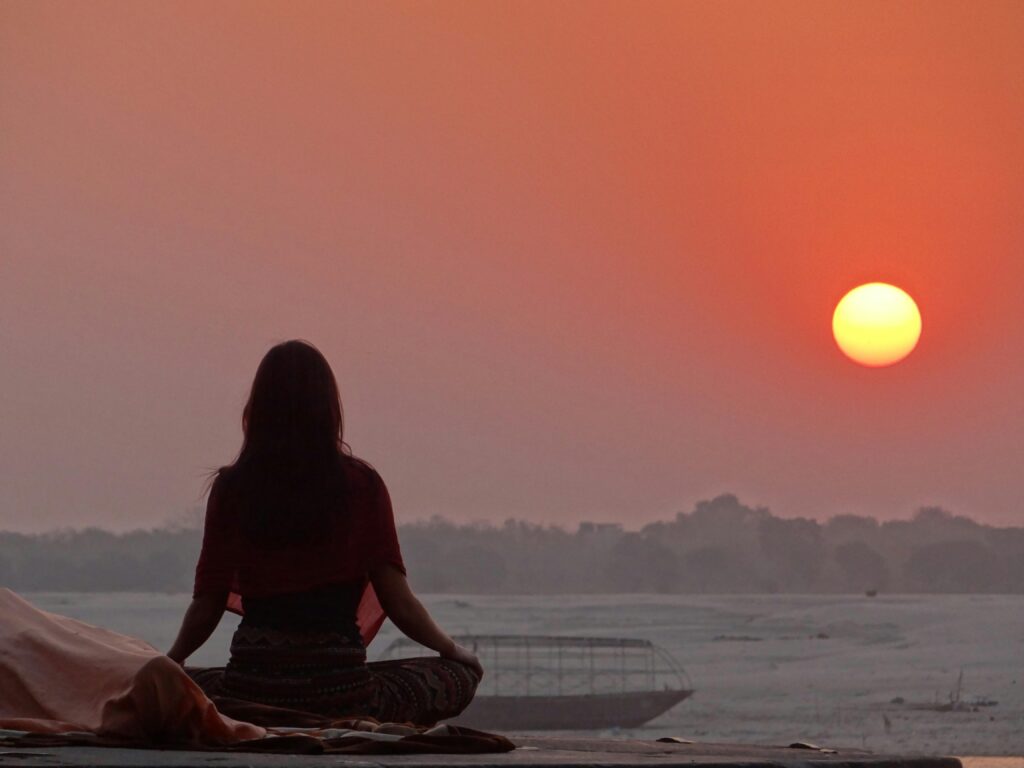
    Person contemplating the horizon at sunset

    Few questions have followed humanity as persistently as this one:

    What happens after death?

    Does consciousness simply disappear when the body dies? Does something continue? Is there a soul that survives, or does everything come to an end?

    For thousands of years, people have offered different answers. Some believed that a soul travels to another realm. Others argued that death is simply the end of existence.

    The Buddha approached the question from a very different direction.

    Rather than beginning with death, he began with the nature of experience itself.

    More than 2,500 years ago, he asked a simple but profound question:

    Can we find a self that never changes?

    Our bodies change continuously. Thoughts arise and disappear. Emotions come and go. Even memories shift over time.

    If everything we normally identify with is constantly changing, where is the fixed and permanent self we assume to be there?

    The Buddha did not conclude that nothing exists. Instead, he pointed to something more subtle.

    Life is happening.

    Experience is happening.

    But the owner of those experiences is more difficult to find than we often assume.

    According to his teaching, much of what we call “self” is continually being constructed through our reactions to life.

    We see something and immediately respond.

    We desire.

    We resist.

    We cling to pleasure and push away discomfort.

    Through countless repetitions of these reactions, a sense of identity gradually forms and reinforces itself.

    This process was described as becoming—the ongoing creation of the person we believe ourselves to be.

    This perspective also sheds light on the Buddhist understanding of rebirth.

    Many people imagine rebirth as a soul moving from one body to another. Yet the Buddha often described it in a more subtle way.

    A traditional image compares it to one candle lighting another.

    Is the new flame exactly the same as the first?

    No.

    Is it completely different?

    Not entirely.

    In a similar way, life continues through causes and conditions rather than through the transfer of a permanent self.

    Patterns continue.

    Habits continue.

    Cravings continue.

    Fear continues.

    From this perspective, rebirth is not merely something that happens after death. It is happening constantly.

    When anger takes over the mind, a new world of anger is born.

    When anxiety dominates awareness, we begin living inside anxiety.

    When craving becomes our master, we become the craving itself.

    Each moment of identification creates a new version of who we believe we are.

    This leads to a deeper reflection.

    Perhaps the most important question is not:

    “What happens after death?”

    Perhaps the more immediate question is:

    “What is happening right now that keeps creating the one who fears death?”

    The Buddha did not offer detailed maps of the afterlife. Instead, he encouraged careful observation of the forces that shape experience in the present moment.

    If those forces remain active, the cycle of becoming continues.

    If they are deeply understood and released, something profoundly different becomes possible.

    Whether one accepts these teachings literally or symbolically, they invite us to look beyond speculation and toward direct experience.

    And perhaps that is where the inquiry truly begins.

    Not with death.

    But with this moment.

    Watch the Video

    This reflection is based on a video originally published on the Quiet Space YouTube channel.

    Watch the full video here:


    ← Back to Reflections Archive

  • The Buddha Refused to Explain the Afterlife — Here’s Why

    The Buddha Refused to Explain the Afterlife — Here’s Why

    The Buddha Refused to Explain the Afterlife — Here’s Why

    Many people assume that spiritual teachers have clear answers about what happens after death.

    Yet the Buddha often refused to answer questions about the afterlife.

    When asked whether the world is eternal or not, whether the self survives death, or what exactly happens after enlightenment, he frequently remained silent.

    Why?

    Was he hiding something?

    Did he not know?

    According to the early Buddhist texts, the reason was surprisingly practical.

    The Buddha believed that some questions do not lead to freedom from suffering.

    He compared them to a person struck by a poisoned arrow.

    Instead of removing the arrow, the person insists on knowing who shot it, what kind of bow was used, and where the arrow came from.

    Meanwhile, the poison continues to spread.

    In the same way, endless speculation about the afterlife can distract us from understanding the causes of suffering here and now.

    This does not mean the Buddha denied the possibility of rebirth or continued existence.

    Rather, he emphasized direct understanding over philosophical speculation.

    His teaching was not focused on constructing a theory of the universe.

    It was focused on awakening.

    Clouds floating in the sky representing the unknown nature of the afterlife

    The essential question was not:

    “What happens after death?”

    but

    “Can suffering end?”

    For the Buddha, the answer to that question mattered far more than any description of an unseen world.

    Reflection

    Perhaps the most important mystery is not what comes after death.

    Perhaps it is whether we are fully awake to this moment.


    Watch the Video


    ← Back to Reflections Archive

  • What Happens to Consciousness After Death? Why the Buddha Refused to Explain

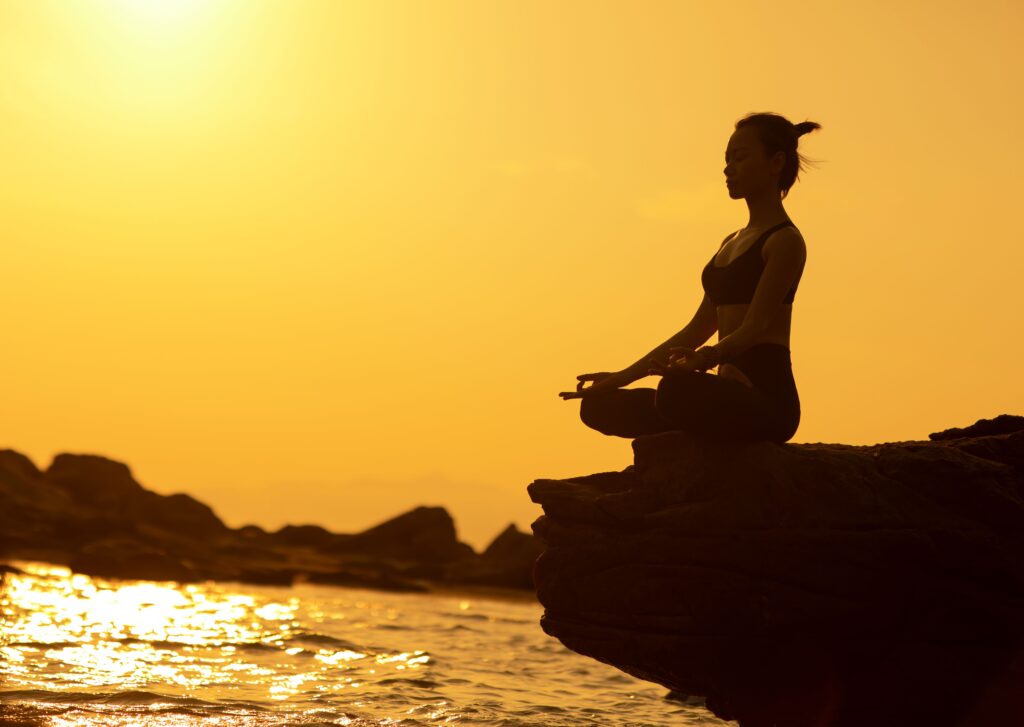
    Person meditating at sunset contemplating consciousness after death

    For thousands of years, human beings have asked the same question:

    What happens to consciousness after death?

    Ancient India was no different. Philosophers, seekers, and spiritual teachers debated this question endlessly, and many people asked the Buddha directly.

    Yet the Buddha’s response was surprising.

    Why Did the Buddha Refuse to Answer Questions About the Afterlife?

    People asked whether an awakened person exists after death, ceases to exist, both exists and does not exist, or transcends all such descriptions.

    The Buddha refused to answer.

    He explained that these questions do not lead to the end of suffering.

    His silence was not a sign of ignorance. Rather, it reflected a deliberate focus on what helps liberate the mind from suffering.

    Did the Buddha Believe Everything Ends at Death?

    Not exactly.

    The Buddha repeatedly taught rebirth. However, he did not describe rebirth as the migration of an eternal soul.

    He taught continuity without a permanent self.

    Craving leads to renewed existence. Where conditions exist, becoming arises.

    Candle in darkness symbolizing awareness and impermanence

    The Candle Analogy: Continuity Without a Permanent Self

    The Buddha used a famous image.

    One candle lights another candle.

    Is the second flame the same flame?

    Not exactly.

    Is it completely different?

    Not exactly.

    This analogy points to continuity without identity. Something continues, but not a fixed self moving through time.

    What Continues After Death According to Early Buddhism?

    According to early Buddhist teachings, what continues is not a soul but a process.

    Consciousness itself is conditional. It arises when causes and conditions come together.

    The deeper question is not:

    “What happens to consciousness after death?”

    Instead, Buddhism asks:

    “Do the conditions that generate suffering and continued existence still remain?”

    The Conditions That Sustain Rebirth

    The Buddha identified several key conditions:

    • Craving
    • Attachment
    • Ignorance
    • Habitual patterns of mind

    These conditions become the fuel for repeated becoming.

    A traditional Buddhist formula expresses this symbolically:

    • Karma is the field
    • Consciousness is the seed
    • Craving is the moisture

    When these conditions are present, existence continues.

    When Does Rebirth End?

    The Buddha taught that when craving completely ceases, rebirth also ceases.

    This shifts the focus away from speculation and toward direct transformation.

    The goal is not to construct theories about the afterlife but to understand the causes of suffering here and now.

    Meditative silhouette representing inner observation and awareness

    The Parable of the Poisoned Arrow

    To explain this point, the Buddha offered a famous example.

    A man is struck by a poisoned arrow.

    Before allowing treatment, he demands to know who shot it, what the bow was made from, and many other details.

    The Buddha said that such a man would die before receiving help.

    Likewise, becoming obsessed with metaphysical questions can distract us from understanding suffering itself.

    The Real Buddhist Investigation

    Buddhism encourages direct observation:

    • Notice the body.
    • Notice sensations.
    • Notice thoughts.
    • Notice craving as it appears.

    Suffering is not merely philosophical.

    It is structural.

    It is psychological.

    It is repetitive.

    According to the Buddha, freedom begins when this entire mechanism is clearly seen.

    Final Reflection

    The Buddha did not provide a detailed map of the afterlife.

    Instead, he pointed to the causes of suffering and the possibility of liberation.

    For early Buddhism, the most important question is not what happens after death.

    The most important question is whether the conditions that perpetuate suffering are still operating in this very moment.

    One reason this question continues to fascinate human beings is that it touches our deepest fear and curiosity.

    We want certainty about what happens after death because we seek permanence and security.

    Yet early Buddhist teachings suggest that freedom does not come from obtaining final answers about the future.

    Freedom comes from understanding how attachment, craving, and identification operate in the present moment.

    When these processes are clearly seen, the mind becomes less dependent on beliefs and more capable of direct understanding.

    Perhaps this is why the Buddha repeatedly redirected attention from speculation toward observation.

    The invitation was not to believe, but to see.

    If you enjoyed this exploration of early Buddhist teachings on consciousness and rebirth, you can watch the full video on the Quiet Space YouTube channel for a deeper reflection on awareness, suffering, and the nature of existence.

    Watch the Full Video

    Watch the full video on Quiet Space:

    Related Reading

    Who Is Aware of the Thought? Awareness, Mind and Consciousness

    Where Do Thoughts Come From? A Quiet Inquiry Into Awareness


    ← Back to Reflections Archive