A person dies. The body no longer moves, and the brain is no longer active. The memories, emotions, personality, and habits once expressed through that body can no longer be observed.
Yet Buddhism teaches that this person’s story may not be entirely over. The karma created during that life, together with craving that has not been extinguished, is said to condition another birth.
This brings us to a question that deserves more attention:
“What carries the karma and craving of one life into the next? “
If we say that a soul travels from one body to another, the problem appears relatively simple. The body dies, but the soul remains, carrying memories, tendencies, and the consequences of past actions into a new body.
But Buddhism does not accept such an eternal soul or permanent self. The body is not an enduring self. Neither are feeling, perception, volitional activity, or even consciousness.
Then what connects the life of one person to the life of a future being?
Stating a Doctrine Is Not Explaining Its Mechanism
When this question is raised, we often hear familiar phrases:
- Karma does not disappear.
- The stream of consciousness continues.
- Cause and effect carry on.
- Craving gives rise to renewed existence.
These statements summarize Buddhist doctrine. But summarizing a doctrine is not the same as explaining how it works.
To say that karma continues is to repeat the conclusion we are trying to understand. If karma survives death, what preserves it? If a stream of consciousness continues, what is that stream made of, and what allows it to persist after the body and brain have ceased to function?
The phrase “causal continuity” raises the same difficulty.
Continuity Within Life Is Not Continuity Across Death
Within one lifetime, we can observe causes continuing into effects. Fear repeatedly experienced in childhood may influence behavior in adulthood. Thoughts and actions repeated over many years can become habits embodied in the brain and nervous system.
Even if the process is not fully understood, there is at least a continuing organism through which those effects persist. A person may lose many memories, yet the same living body and nervous system remain across time.
Death is different. The original body breaks down and its brain activity ends. If another life follows, that being is born with another body and another brain, perhaps in another place and to different parents.
This is the decisive difference between continuity within one life and continuity across death. We cannot establish rebirth after death simply by pointing to cause and effect within a living organism.
Showing that continuity without complete memory is possible is not the same as explaining how rebirth actually occurs.
Karma and Craving Are Not Substances
In the early Buddhist texts, karma is fundamentally defined as intention. Through intention, we act by body, speech, and mind.
Karma is therefore not a dark substance stored inside the body, nor is it a score written in a cosmic account book. It is intentional action, said to produce consequences for later experience and existence.
Craving is not a substance either. It is the movement of mind that wants a pleasant experience to continue, demands that existence take a desired form, or wants an unwanted reality to disappear.
In dependent origination, craving conditions grasping, grasping conditions continued existence or becoming, and becoming conditions birth.
But describing this conditional sequence is not the same as explaining how craving crosses the break of death and acquires causal power over another birth
Three Problems Any Account of Rebirth Must Address
Imagine two people. One spends a lifetime caring for others; the other repeatedly acts with cruelty. If Buddhism teaches that their actions lead to different results, then the difference between those two causal histories must somehow survive death.
At least three problems must therefore be addressed.
1. The Problem of Preservation
What prevents the specific differences created by one life from disappearing at death?
2. The Problem of Causal Connection
When the deceased person and the newborn being share neither a body nor a brain, how does one causal history connect them?
3. The Problem of Moral Attribution
Why should the consequences of one person’s actions belong to one particular future being rather than to someone entirely unrelated?
If the future being is the same person, what exactly remains the same? If it is not the same person, why should it inherit the consequences?
Without answers to these questions, the statement that karma continues into another life may express a doctrine, but it does not yet explain a mechanism.
Is the Consciousness the Same or Different?
Some early Buddhist passages make the problem more difficult.
On one hand, consciousness is said not to be a permanent self. The idea that one identical consciousness travels unchanged from life to life is explicitly rejected.
On the other hand, another early discourse says that if consciousness did not descend into the womb, mind and body would not develop there.
What, then, is the consciousness described as descending into the womb? Where did it come from? Is it the same consciousness as that of the previous life?
If it is not the same, why does it inherit that life’s karma? If it is not entirely different, what establishes continuity between them?
What the Candle Analogy Does Not Explain
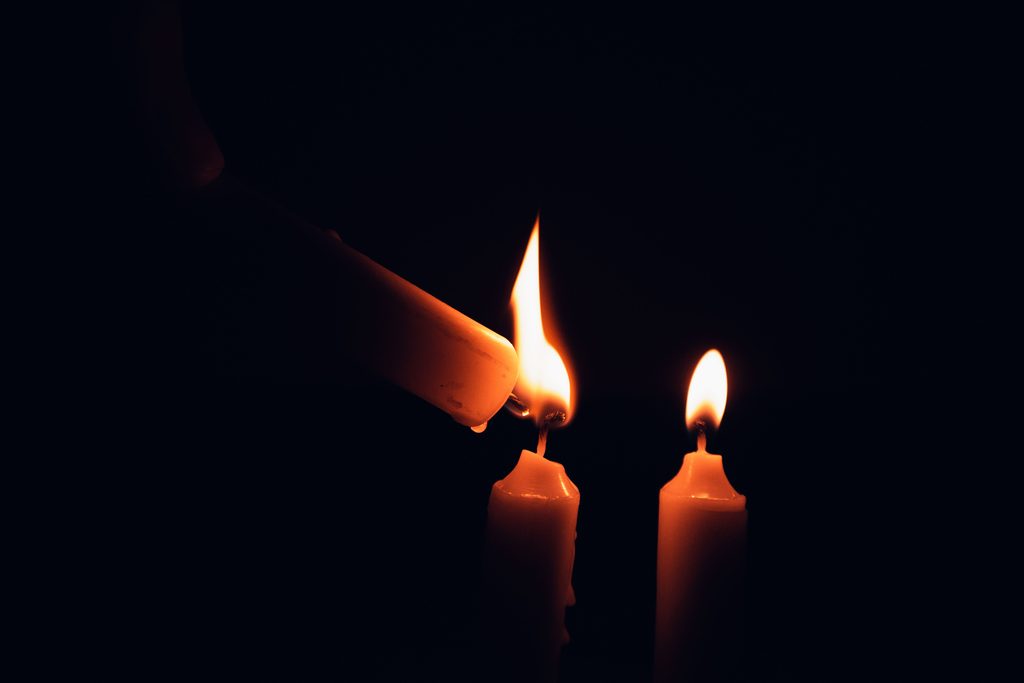
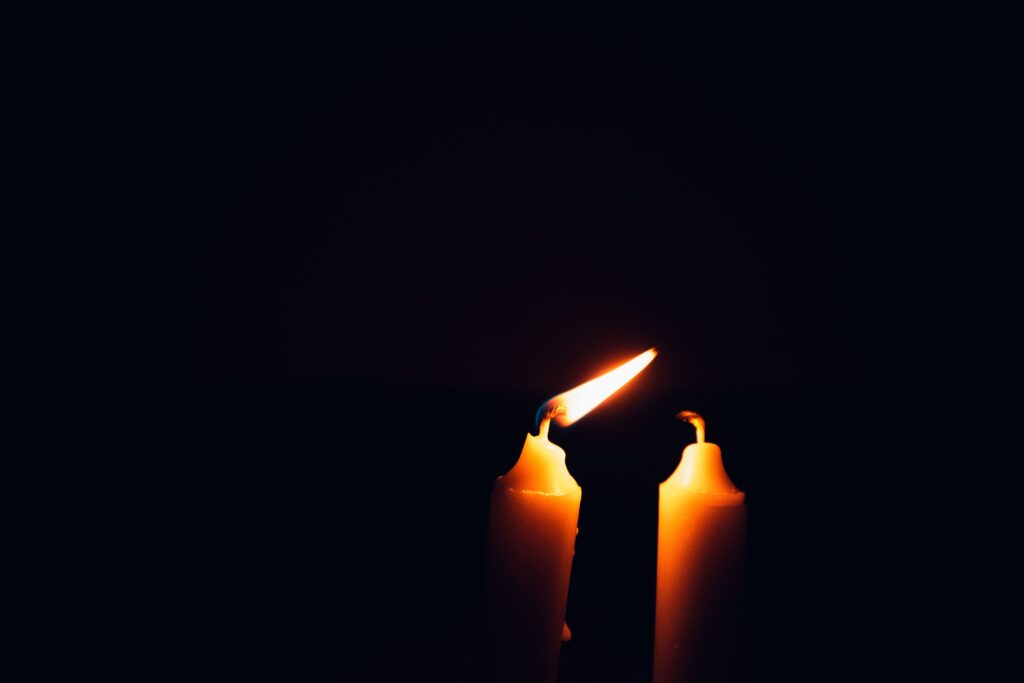
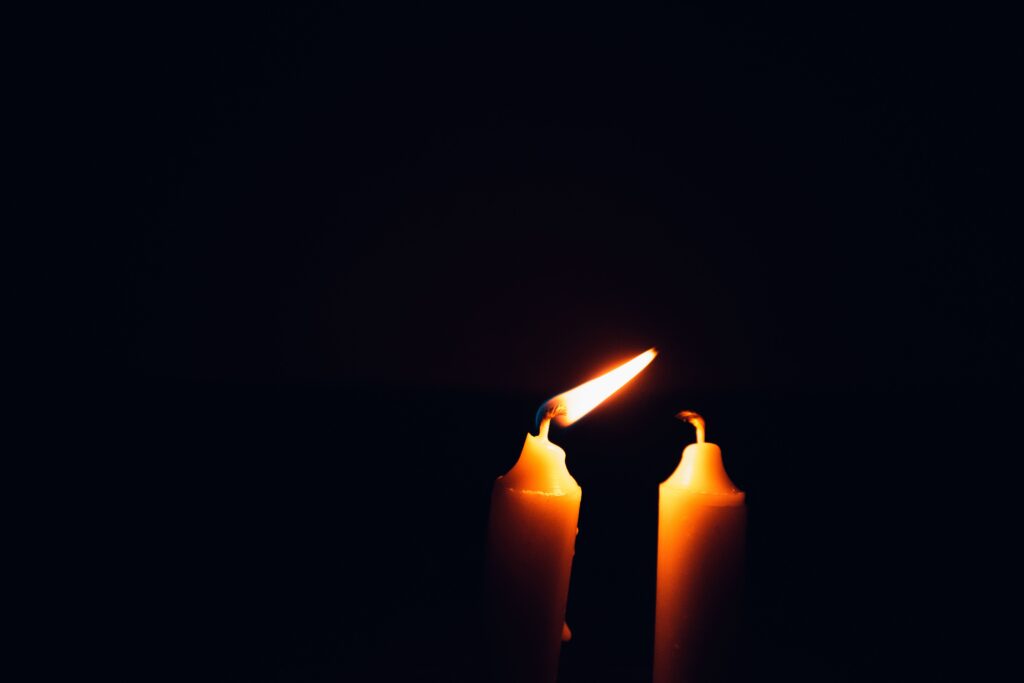
Buddhist explanations often use the image of one flame lighting another. The first flame does not move as a whole into the second, yet without the first the second would not have arisen.
The analogy helps us understand how causation might continue without a permanent substance passing from one place to another. But it only takes us so far.
With actual candles, there is heat, fuel, air, and a physical process connecting the two flames. In the case of rebirth, the equivalent connecting process is exactly what we are trying to identify.
Repeating the analogy does not reveal what happens between death and another birth.
Why Later Buddhist Schools Proposed New Models
Buddhist schools did not leave this difficulty untouched. Some traditions proposed an immediate causal connection between the final moment of one life and the first moment of the next. Some accepted an intermediate state between death and birth. One school spoke of a person to whom karmic consequences could be attributed. Later Buddhist traditions developed ideas such as karmic seeds and storehouse consciousness.
The existence of these theories suggests that Buddhist thinkers themselves recognized how difficult it was to explain rebirth while denying a permanent self.
We should not blend these models together and present them as one timeless Buddhist answer. We must distinguish what the early discourses actually say, what later schools added, which problem each theory attempted to solve, and what new difficulties it created.
Leaving the Question Open Without Pretending It Is Solved
What science has not verified is not automatically false. But neither is it automatically true.
We do not need to assume that rebirth is impossible. Nor should we assume that it is established fact simply because a scripture affirms it.
We can leave possibility open without turning possibility into evidence. We can respect faith without presenting faith as established knowledge. And we can admit when a mechanism remains unknown.
Buddhism teaches that karma and craving condition another birth. Then how is that conditioning preserved? What allows it to cross the break of death? And why are its consequences attributed to one particular future being?
Until these questions are answered, “rebirth without a soul” should not be treated as the conclusion of the inquiry. It should be where the inquiry begins.
In the next article, we will examine Buddhism’s most fundamental response: dependent origination. How much does the statement “when this exists, that comes to be” actually explain about the mechanism of rebirth—and where does it leave another unanswered question?
Early Buddhist Texts Referenced
- Anguttara Nikaya 6.63: karma defined as intention
- Samyutta Nikaya 12.2: craving, grasping, becoming, and birth
- Samyutta Nikaya 22.59: the five aggregates and not-self
- Majjhima Nikaya 38: rejection of one identical consciousness migrating through lives
- Digha Nikaya 15: consciousness, name-and-form, and descent into the womb