Does dependent origination explain how rebirth works without a permanent soul?
Buddhism teaches that nothing arises independently. Phenomena appear when the necessary causes and conditions are present and cease when those conditions disappear.
This principle is commonly expressed as follows:
“When this exists, that comes to be. With the arising of this, that arises. When this does not exist, that does not come to be. With the cessation of this, that ceases.”
Dependent origination stands at the center of Buddhist thought. It explains that suffering does not appear without causes and does not require an unchanging self that creates and owns every experience.
Yet a further question remains. Does dependent origination describe only the relationship between conditions, or does it also explain the mechanism by which karma and craving cross death?
The Twelve Conditions
The early Buddhist discourses frequently present dependent origination through twelve conditions.
Ignorance conditions formations. Formations condition consciousness. Consciousness conditions name-and-form, and name-and-form conditions the six sense bases.
The six sense bases condition contact. Contact conditions feeling. Feeling conditions craving. Craving conditions clinging. Clinging conditions becoming. Becoming conditions birth, and birth conditions aging, death, sorrow, and suffering.
The sequence can also be reversed. With the cessation of ignorance, formations cease. With the cessation of craving, clinging ceases. Ultimately, birth, aging, and death cease.
Dependent origination therefore provides a powerful explanation of how suffering arises and how its conditions may be brought to an end.
But identifying a sequence of conditions is not necessarily the same as explaining every process operating between them.
A Conditional Relationship Is Not Yet a Complete Mechanism
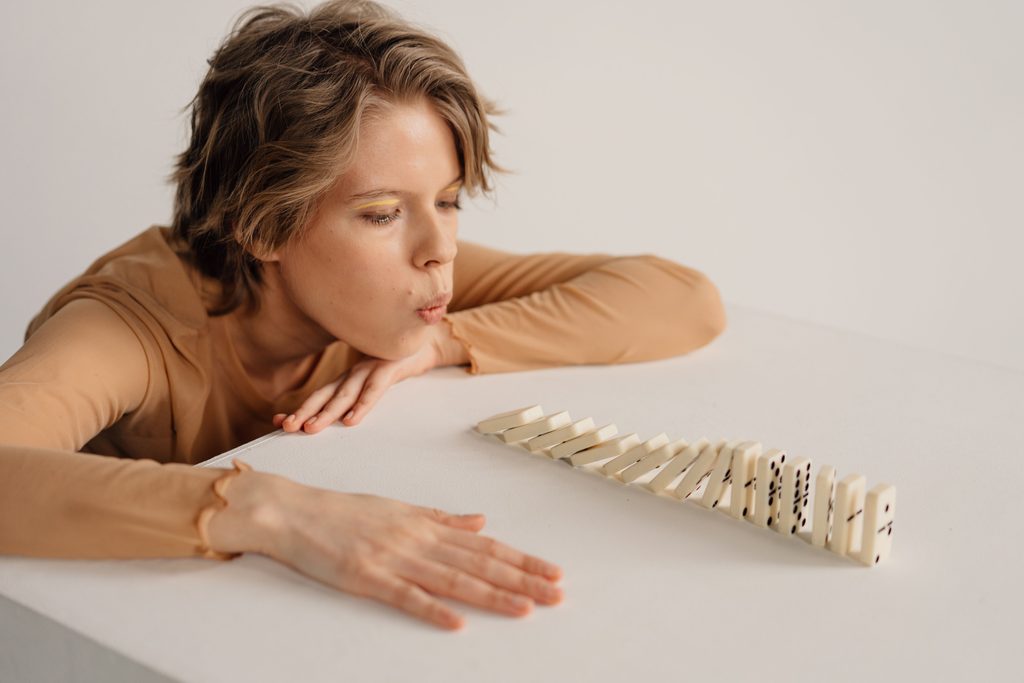
Suppose we say that fire causes water to boil.
The statement identifies a valid causal relationship. A fuller account, however, would explain how heat passes from the flame into the pot and increases the movement of the water molecules.
“Because there is fire, the water boils” is not false. It simply does not provide the complete process of heat transfer.
The same distinction applies when Buddhism says that craving conditions clinging, clinging conditions becoming, and becoming conditions birth.
This sequence identifies the direction of the proposed causal relationship. It does not automatically reveal how craving remains causally effective after the body and brain have disappeared.
If craving formed during one life conditions another birth, in what does that craving remain? Through what pathway does it influence a new being? Why does one person’s craving condition one particular future birth rather than the birth of someone entirely unrelated?
These questions do not deny the conditional relationship. They ask how that relationship operates across death.
Continuity Within Life and Continuity Beyond Death
Buddhism does not require an unchanging substance to travel from one moment to another for causation to continue.
The person we were yesterday is not completely identical to the person we are today. Our bodies, thoughts, and emotions change, yet yesterday’s actions continue to affect today’s life.
Continuity within one lifetime, however, cannot automatically explain continuity beyond death.
During life, the same organism continues. The brain and nervous system provide a physical basis through which habits, memories, and behavioral dispositions can persist.
At death, that brain ceases to function and eventually disintegrates. A future child develops a different body and brain from different parents.
An explanation of rebirth must therefore show how causal influence continues after one body and brain disappear and before another body and brain emerge.
The Three-Life Interpretation
Traditional Buddhist interpretation often distributes the twelve links across three lives.
Ignorance and formations are assigned to a previous life. Consciousness, name-and-form, the sense bases, contact, and feeling are treated as present results of previous conditions.
Craving, clinging, and becoming operate as present causes, while birth, aging, and death belong to a future life.
This model provides a systematic way to read the twelve links as a description of rebirth.
The basic formula in the early discourses, however, does not itself present a table dividing all twelve factors among past, present, and future lives. That arrangement was systematized more fully in later Abhidharma and commentarial traditions.
More importantly, placing one factor in a past life and another in a future life does not itself explain how causal influence passes between them.
We may say that past formations condition present consciousness. We may still ask how those intentional formations remain causally effective after the former body and brain have disappeared and how their effects reach a newly arising consciousness.
The model identifies temporal positions. It does not necessarily identify the process connecting them.
Dependent Origination in Present Experience
Some modern Buddhist interpretations explain dependent origination primarily within one lifetime or as a succession of present mental events.
Contact gives rise to feeling. When feeling is grasped, craving develops. Craving strengthens clinging and the construction of a self.
This interpretation is highly useful for understanding how suffering arises in immediate experience. It allows us to observe the movement from feeling to craving and shows where attachment may be interrupted.
An explanation of present psychological experience, however, does not automatically explain birth after death.
If dependent origination is interpreted only as a present-life process, the postmortem question is left aside. If it is interpreted as a sequence across three lives, the connection between those lives still requires clarification.
What Dependent Origination Explains
Dependent origination explains that suffering arises conditionally. It shows how ignorance, craving, and clinging sustain suffering and why removing those conditions can bring suffering to an end.
A complete account of rebirth, however, would also need to answer several additional questions.
If each person’s intentional actions and patterns of craving produce distinct results after death, what keeps that person’s karma, attachments, and cravings causally distinct after the body and brain have ceased to exist?
What causal connection exists between the person who dies and the being who is born?
Why are the consequences of one person’s actions attributed to the particular being called that person’s next life rather than to any other being?
Is the consciousness involved in the next birth the same as the consciousness of the previous life, entirely different, or neither strictly the same nor completely different?
Dependent origination provides a logical framework in which rebirth need not involve a permanent soul. That framework is not necessarily the same as a complete working model of how rebirth occurs without one.
This distinction does not reject dependent origination. It separates what the early teaching states, what later Buddhist traditions added, and what remains unexplained.
Saying “rebirth occurs through dependent origination” may merely restate the question unless we can explain how karma and craving from one life remain causally effective and influence one particular new birth after death.
The next inquiry will examine the concept most frequently offered as the missing connection: the “continuum of consciousness.”