Tag: consciousness

  • You Are Not the Voice in Your Head

    Person standing quietly in contemplation

    There is a voice that seems to speak inside the mind.

    It comments on what we see, reacts to what happens, and constantly tells stories about who we are.

    Most of the time, we rarely question it.

    The voice feels familiar.

    It feels personal.

    It feels like “me.”

    But is it?

    If we observe carefully, something interesting begins to appear.

    The voice is never the same from one moment to the next.

    Sometimes it is calm.

    Sometimes anxious.

    Sometimes encouraging.

    Sometimes critical.

    Its opinions change. Its stories change. Its moods change.

    Yet we often assume that this constantly changing voice represents our true identity.

    This raises an important question:

    How can something so unstable be what we truly are?

    The inner voice is made of thoughts, and thoughts are not permanent.

    A memory appears.

    A worry follows.

    A plan begins to form.

    Thoughts arrive without invitation and disappear without asking permission.

    If we pay close attention, we may notice something even more surprising.

    We do not consciously create the next thought.

    Instead, we become aware of it after it appears.

    The voice may seem like one continuous stream, but it is actually made up of countless separate thoughts arising and fading moment by moment.

    Like clouds moving across the sky, thoughts appear connected, yet each one is temporary.

    And while thoughts constantly change, something else remains.

    Clouds drifting across an open sky

    There is an awareness that notices every thought.

    It observes without judgment.

    It does not argue.

    It does not need to defend itself.

    It simply knows.

    This awareness is not the voice.

    It is what hears the voice.

    When this distinction becomes clear, the inner dialogue begins to lose some of its authority.

    Thoughts are no longer commands that must be obeyed.

    They become events that can be observed.

    The voice is still there, but it no longer defines who we are.

    Perhaps the most important discovery is not learning how to silence the voice.

    Perhaps it is realizing that we were never the voice to begin with.

    We are the awareness in which the voice appears.

    And in that simple recognition, something quiet begins to open.

    Watch the Video

    This reflection is based on a video originally published on the Quiet Space YouTube channel.

    Watch the full video here:


    ← Back to Reflections Archive

  • Where Do Thoughts Come From?

    Have you ever noticed how a thought suddenly appears?

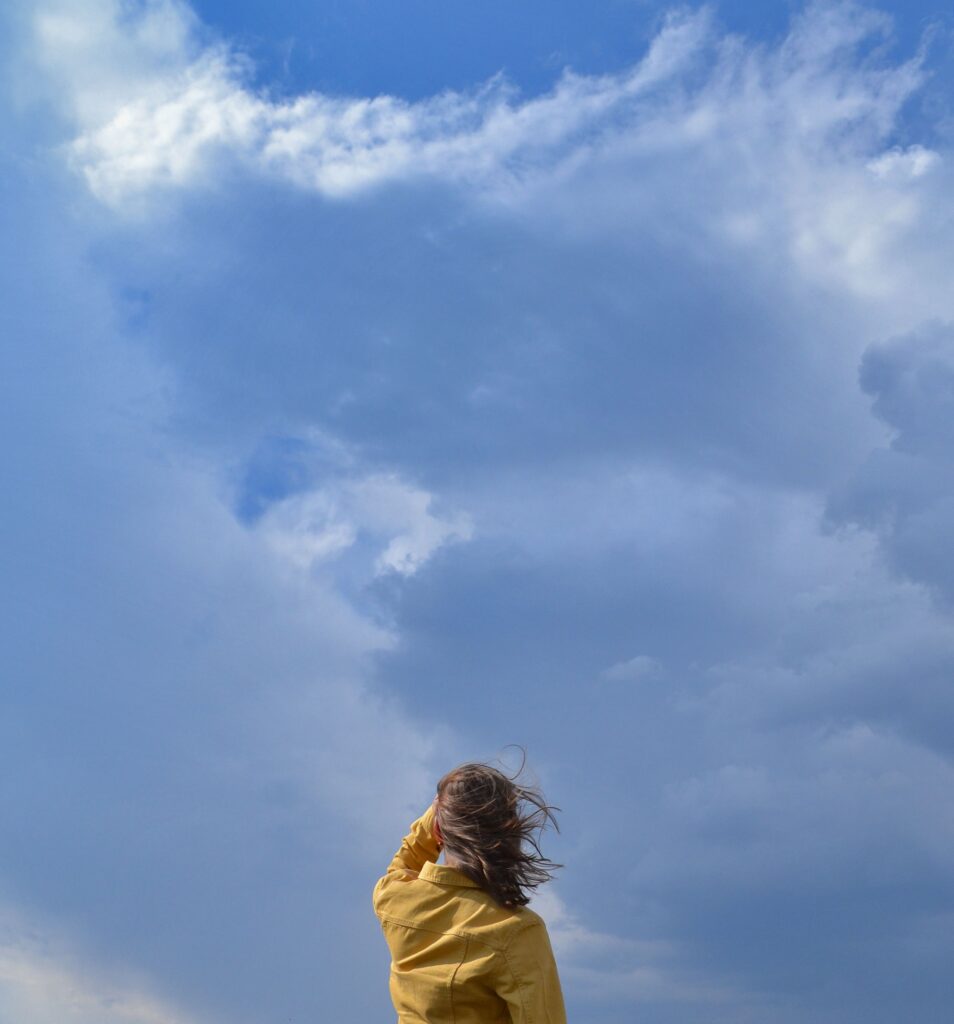
    Person quietly observing the sky and clouds

    One moment there is silence.

    The next moment, a memory, a worry, a plan, or an opinion arrives in the mind.

    Most of us spend our lives thinking without ever pausing to ask a simple question:

    Where did that thought come from?

    Did we consciously choose it?

    Or did it simply appear on its own?

    If we observe carefully, thoughts seem to arise much like clouds moving across an open sky.

    They appear.

    They change.

    They disappear.

    Yet something remains present throughout the entire process.

    There is an awareness that notices each thought as it comes and goes.

    This observation invites a deeper question.

    We often assume that we are the thinker.

    But can we actually find the moment when we decide what the next thought will be?

    Can we deliberately choose the very next thought before it appears?

    Or does the thought arrive first, with the sense of choosing coming afterward?

    These questions are not merely philosophical. They point toward direct experience.

    When we begin observing thoughts instead of immediately identifying with them, something subtle changes.

    Thoughts lose some of their authority.

    They become events occurring within awareness rather than commands that must be followed.

    A memory appears.

    A worry appears.

    A judgment appears.

    And each one can simply be noticed.

    Between thoughts there is often a brief gap.

    A quiet stillness.

    Still lake reflecting the sky

    Most of the time we overlook it because our attention is captured by the next thought.

    Yet that stillness may be just as important as the thoughts themselves.

    The next time a thought arises, try not to follow it immediately.

    Pause.

    Observe.

    Notice how it appears without invitation and eventually fades away.

    In that simple observation, the mind may begin to feel less solid than it once seemed.

    And perhaps we discover that what we truly are is not the movement of thought itself, but the awareness in which thought appears.

    Watch the Video

    This reflection is based on a video originally published on the Quiet Space YouTube channel.

    Watch the full video here:


    ← Back to Reflections Archive

  • What Happens to Consciousness After Death?

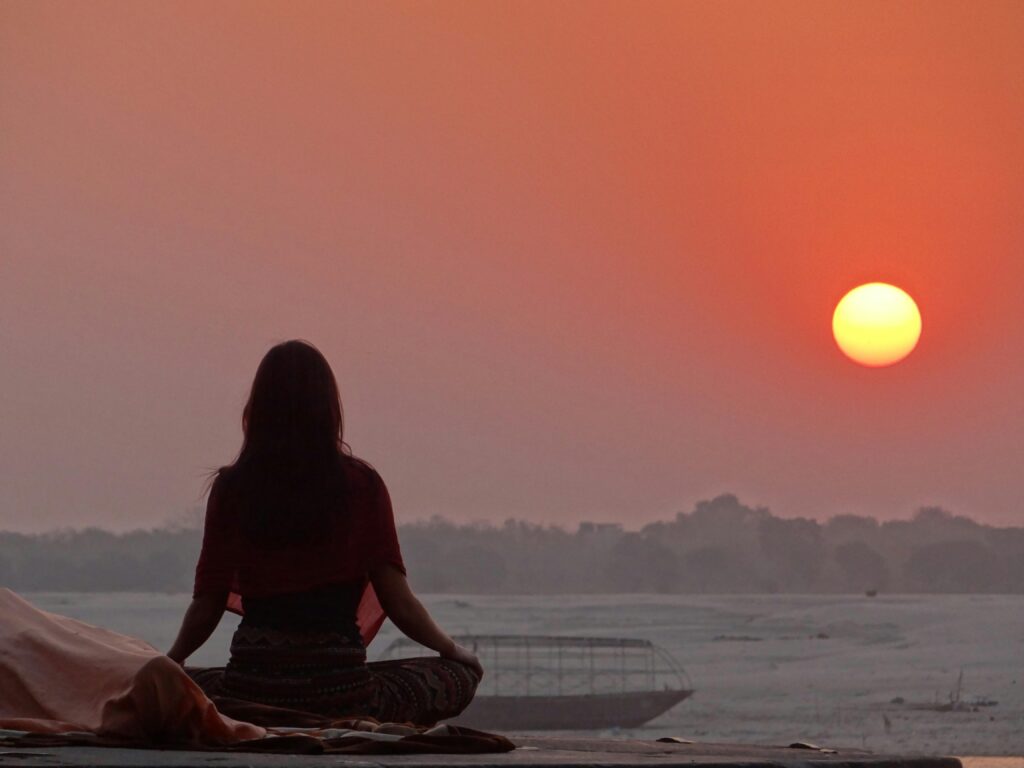
    Person contemplating the horizon at sunset

    Few questions have followed humanity as persistently as this one:

    What happens after death?

    Does consciousness simply disappear when the body dies? Does something continue? Is there a soul that survives, or does everything come to an end?

    For thousands of years, people have offered different answers. Some believed that a soul travels to another realm. Others argued that death is simply the end of existence.

    The Buddha approached the question from a very different direction.

    Rather than beginning with death, he began with the nature of experience itself.

    More than 2,500 years ago, he asked a simple but profound question:

    Can we find a self that never changes?

    Our bodies change continuously. Thoughts arise and disappear. Emotions come and go. Even memories shift over time.

    If everything we normally identify with is constantly changing, where is the fixed and permanent self we assume to be there?

    The Buddha did not conclude that nothing exists. Instead, he pointed to something more subtle.

    Life is happening.

    Experience is happening.

    But the owner of those experiences is more difficult to find than we often assume.

    According to his teaching, much of what we call “self” is continually being constructed through our reactions to life.

    We see something and immediately respond.

    We desire.

    We resist.

    We cling to pleasure and push away discomfort.

    Through countless repetitions of these reactions, a sense of identity gradually forms and reinforces itself.

    This process was described as becoming—the ongoing creation of the person we believe ourselves to be.

    This perspective also sheds light on the Buddhist understanding of rebirth.

    Many people imagine rebirth as a soul moving from one body to another. Yet the Buddha often described it in a more subtle way.

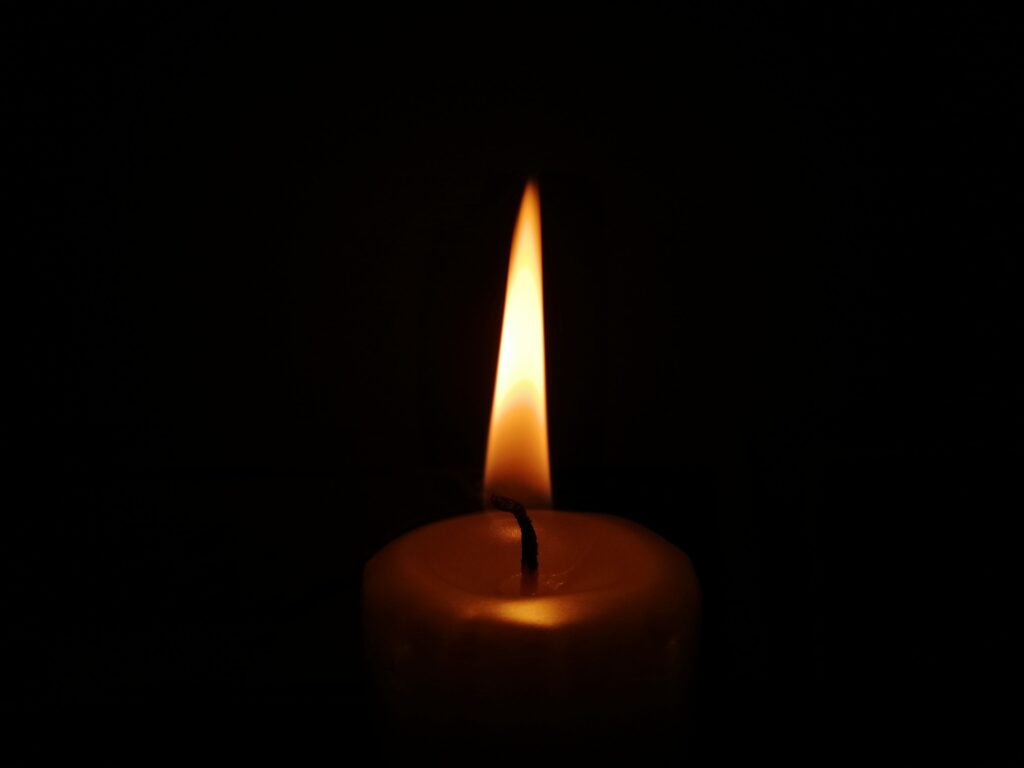
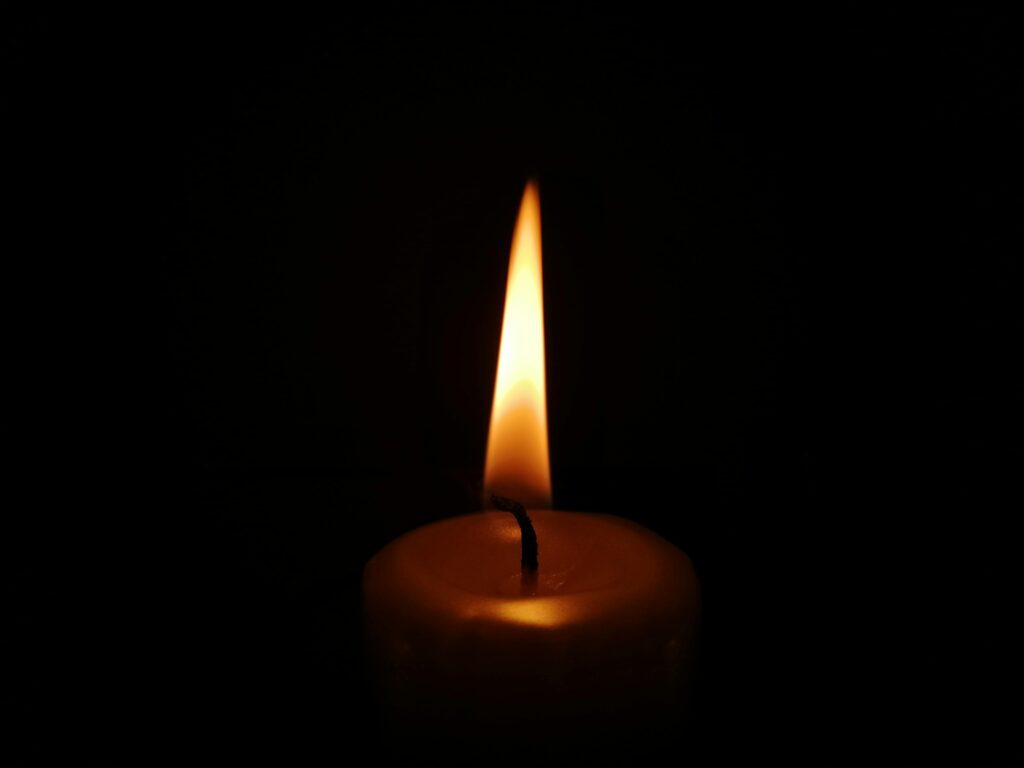
    A traditional image compares it to one candle lighting another.

    Is the new flame exactly the same as the first?

    No.

    Is it completely different?

    Not entirely.

    In a similar way, life continues through causes and conditions rather than through the transfer of a permanent self.

    Patterns continue.

    Habits continue.

    Cravings continue.

    Fear continues.

    From this perspective, rebirth is not merely something that happens after death. It is happening constantly.

    When anger takes over the mind, a new world of anger is born.

    When anxiety dominates awareness, we begin living inside anxiety.

    When craving becomes our master, we become the craving itself.

    Each moment of identification creates a new version of who we believe we are.

    This leads to a deeper reflection.

    Perhaps the most important question is not:

    “What happens after death?”

    Perhaps the more immediate question is:

    “What is happening right now that keeps creating the one who fears death?”

    The Buddha did not offer detailed maps of the afterlife. Instead, he encouraged careful observation of the forces that shape experience in the present moment.

    If those forces remain active, the cycle of becoming continues.

    If they are deeply understood and released, something profoundly different becomes possible.

    Whether one accepts these teachings literally or symbolically, they invite us to look beyond speculation and toward direct experience.

    And perhaps that is where the inquiry truly begins.

    Not with death.

    But with this moment.

    Watch the Video

    This reflection is based on a video originally published on the Quiet Space YouTube channel.

    Watch the full video here:


    ← Back to Reflections Archive

  • The Buddha Refused to Explain the Afterlife — Here’s Why

    The Buddha Refused to Explain the Afterlife — Here’s Why

    The Buddha Refused to Explain the Afterlife — Here’s Why

    Many people assume that spiritual teachers have clear answers about what happens after death.

    Yet the Buddha often refused to answer questions about the afterlife.

    When asked whether the world is eternal or not, whether the self survives death, or what exactly happens after enlightenment, he frequently remained silent.

    Why?

    Was he hiding something?

    Did he not know?

    According to the early Buddhist texts, the reason was surprisingly practical.

    The Buddha believed that some questions do not lead to freedom from suffering.

    He compared them to a person struck by a poisoned arrow.

    Instead of removing the arrow, the person insists on knowing who shot it, what kind of bow was used, and where the arrow came from.

    Meanwhile, the poison continues to spread.

    In the same way, endless speculation about the afterlife can distract us from understanding the causes of suffering here and now.

    This does not mean the Buddha denied the possibility of rebirth or continued existence.

    Rather, he emphasized direct understanding over philosophical speculation.

    His teaching was not focused on constructing a theory of the universe.

    It was focused on awakening.

    Clouds floating in the sky representing the unknown nature of the afterlife

    The essential question was not:

    “What happens after death?”

    but

    “Can suffering end?”

    For the Buddha, the answer to that question mattered far more than any description of an unseen world.

    Reflection

    Perhaps the most important mystery is not what comes after death.

    Perhaps it is whether we are fully awake to this moment.


    Watch the Video


    ← Back to Reflections Archive

  • Who Is Aware of the Thought? Awareness, Mind and Consciousness

    A simple inquiry into the silent awareness behind thinking.

    We spend much of our lives immersed in thinking.

    Thoughts arise one after another—plans, memories, worries, hopes, judgments, and opinions.

    Most of the time we follow these thoughts without question.

    But occasionally a different question appears.

    A surprisingly simple one.

    Who is aware of the thought?

    When a thought arises, something notices it.

    You know that the thought is present.

    You know when it changes.

    You know when it disappears.

    But what is it that knows?

    Is it simply another thought observing the first one?

    Or is there something deeper that remains quietly present in the background of every experience?

    Before a word appears in the mind, before an opinion forms, before a judgment takes shape, there is already a simple awareness.

    It does not speak.

    It does not explain.

    It does not argue.

    Yet it is always here.

    Thoughts come and go continuously.

    A memory appears and fades.

    An emotion rises and passes away.

    A belief changes.

    A preference changes.

    Even the sense of who we think we are changes throughout life.

    But the simple fact of knowing experience remains.

    This awareness seems to be present before a thought appears.

    And it remains after the thought disappears.

    Can it be found as an object?

    Does it have a shape?

    A size?

    A color?

    A boundary?

    When we look carefully, awareness does not seem to possess any of these qualities.

    It is simply open.

    Present.

    Available.

    Without center and without edge.

    We often say,

    “I am thinking.”

    But is that completely true?

    Or is thinking simply something that appears within awareness, much like clouds appear in the sky?

    The clouds move.

    The sky remains.

    Thoughts move.

    Awareness remains.

    If you stop for a moment and make no effort to control the mind, something interesting may become apparent.

    Thoughts continue to come and go on their own.

    Yet there is still an awareness of them.

    That awareness is not created by thinking.

    It is not produced by effort.

    It is not something we manufacture.

    It is simply noticed when attention becomes quiet enough to recognize what has always been present.

    Perhaps the deepest inquiry is not where thoughts come from.

    Perhaps it is not even what thoughts mean.

    Perhaps the more fundamental question is:

    Who—or what—is aware of the thought?


    Related Video


    ← Back to Reflections Archive

  • Where Do Thoughts Come From? A Quiet Inquiry Into Awareness

    Every human being experiences thoughts.

    Memories appear unexpectedly.
    Plans for tomorrow arise on their own.
    A fear, an idea, or a random image can suddenly enter the mind.

    But have you ever paused to ask a simple question?

    Where do thoughts come from?

    Most of us are so occupied by the content of thinking that we rarely examine the process itself.

    Yet if we observe carefully, something interesting begins to reveal itself.


    The Moment Before a Thought Appears

    Before every thought, there is a brief moment of silence.

    A thought is not visible one second.

    Then suddenly it is there.

    It may be a memory from years ago.
    It may be a concern about the future.
    It may be a completely unexpected idea.

    The question is:

    Did you consciously choose that thought?

    Or did it simply appear?

    When examined closely, many thoughts seem to arrive on their own.


    Thoughts Move Like Clouds

    Thoughts often resemble clouds moving through an open sky.

    They appear.

    They change.

    They disappear.

    No thought remains forever.

    Yet something else remains present throughout the entire process.

    There is an awareness that notices each thought as it comes and goes.

    This awareness does not need to create the thought in order to observe it.

    It simply notices.


    Are We Really the Thinker?

    Most people assume:

    “I am the one who thinks.”

    But this assumption becomes interesting when we investigate it directly.

    Can you predict your next thought?

    Can you decide exactly what thought will arise ten seconds from now?

    Or does the next thought reveal itself before any conscious choice is made?

    This question has been explored not only in contemplative traditions but also in philosophy and modern cognitive science.


    The Space Between Thoughts

    When thoughts are observed without immediately following them, their nature begins to change.

    They lose some of their urgency.

    They become events occurring within awareness rather than instructions that must be obeyed.

    And occasionally something becomes noticeable.

    Between one thought and the next, there is a brief stillness.

    A silent space that has always been present.

    Most people overlook it because attention is constantly captured by the next thought.

    Yet this stillness may be more fundamental than the thoughts themselves.


    A Quiet Experiment

    The next time a thought appears, do not rush to follow it.

    Pause for a moment.

    Simply notice:

    • Where did this thought come from?
    • Did I choose it?
    • What was present before it appeared?

    No belief is required.

    Only observation.

    The answer may not be found through thinking.

    It may be discovered through awareness itself.


    Final Reflection

    Thoughts come and go.

    Memories come and go.

    Ideas come and go.

    Yet awareness remains.

    Perhaps the deepest question is not where thoughts come from, but what it is that quietly notices them.


    Watch the Full Video

    Watch the original Quiet Space video:


    ← Back to Reflections Archive

  • What Happens to Consciousness After Death? Why the Buddha Refused to Explain

    Person meditating at sunset contemplating consciousness after death

    For thousands of years, human beings have asked the same question:

    What happens to consciousness after death?

    Ancient India was no different. Philosophers, seekers, and spiritual teachers debated this question endlessly, and many people asked the Buddha directly.

    Yet the Buddha’s response was surprising.

    Why Did the Buddha Refuse to Answer Questions About the Afterlife?

    People asked whether an awakened person exists after death, ceases to exist, both exists and does not exist, or transcends all such descriptions.

    The Buddha refused to answer.

    He explained that these questions do not lead to the end of suffering.

    His silence was not a sign of ignorance. Rather, it reflected a deliberate focus on what helps liberate the mind from suffering.

    Did the Buddha Believe Everything Ends at Death?

    Not exactly.

    The Buddha repeatedly taught rebirth. However, he did not describe rebirth as the migration of an eternal soul.

    He taught continuity without a permanent self.

    Craving leads to renewed existence. Where conditions exist, becoming arises.

    Candle in darkness symbolizing awareness and impermanence

    The Candle Analogy: Continuity Without a Permanent Self

    The Buddha used a famous image.

    One candle lights another candle.

    Is the second flame the same flame?

    Not exactly.

    Is it completely different?

    Not exactly.

    This analogy points to continuity without identity. Something continues, but not a fixed self moving through time.

    What Continues After Death According to Early Buddhism?

    According to early Buddhist teachings, what continues is not a soul but a process.

    Consciousness itself is conditional. It arises when causes and conditions come together.

    The deeper question is not:

    “What happens to consciousness after death?”

    Instead, Buddhism asks:

    “Do the conditions that generate suffering and continued existence still remain?”

    The Conditions That Sustain Rebirth

    The Buddha identified several key conditions:

    • Craving
    • Attachment
    • Ignorance
    • Habitual patterns of mind

    These conditions become the fuel for repeated becoming.

    A traditional Buddhist formula expresses this symbolically:

    • Karma is the field
    • Consciousness is the seed
    • Craving is the moisture

    When these conditions are present, existence continues.

    When Does Rebirth End?

    The Buddha taught that when craving completely ceases, rebirth also ceases.

    This shifts the focus away from speculation and toward direct transformation.

    The goal is not to construct theories about the afterlife but to understand the causes of suffering here and now.

    Meditative silhouette representing inner observation and awareness

    The Parable of the Poisoned Arrow

    To explain this point, the Buddha offered a famous example.

    A man is struck by a poisoned arrow.

    Before allowing treatment, he demands to know who shot it, what the bow was made from, and many other details.

    The Buddha said that such a man would die before receiving help.

    Likewise, becoming obsessed with metaphysical questions can distract us from understanding suffering itself.

    The Real Buddhist Investigation

    Buddhism encourages direct observation:

    • Notice the body.
    • Notice sensations.
    • Notice thoughts.
    • Notice craving as it appears.

    Suffering is not merely philosophical.

    It is structural.

    It is psychological.

    It is repetitive.

    According to the Buddha, freedom begins when this entire mechanism is clearly seen.

    Final Reflection

    The Buddha did not provide a detailed map of the afterlife.

    Instead, he pointed to the causes of suffering and the possibility of liberation.

    For early Buddhism, the most important question is not what happens after death.

    The most important question is whether the conditions that perpetuate suffering are still operating in this very moment.

    One reason this question continues to fascinate human beings is that it touches our deepest fear and curiosity.

    We want certainty about what happens after death because we seek permanence and security.

    Yet early Buddhist teachings suggest that freedom does not come from obtaining final answers about the future.

    Freedom comes from understanding how attachment, craving, and identification operate in the present moment.

    When these processes are clearly seen, the mind becomes less dependent on beliefs and more capable of direct understanding.

    Perhaps this is why the Buddha repeatedly redirected attention from speculation toward observation.

    The invitation was not to believe, but to see.

    If you enjoyed this exploration of early Buddhist teachings on consciousness and rebirth, you can watch the full video on the Quiet Space YouTube channel for a deeper reflection on awareness, suffering, and the nature of existence.


    Watch the Full Video

    Watch the full video on Quiet Space:

    Related Reading

    Who Is Aware of the Thought? Awareness, Mind and Consciousness

    Where Do Thoughts Come From? A Quiet Inquiry Into Awareness


    ← Back to Reflections Archive