
Early Buddhism speaks of rebirth, yet it does not describe an eternal soul moving from body to body. That leaves a difficult question: if there is no permanent self, what connects one life to another?
A beginning that cannot be found
The early discourses describe a wandering-on whose first beginning cannot be discovered. Their purpose is not to invite speculation about how many lives we have lived. The more urgent question is what allows the process to continue.
The texts also report that, on the night of awakening, the Buddha recollected many previous lives and saw beings passing away and reappearing in accordance with their actions. These accounts cannot simply be converted into modern scientific proof. But they show that rebirth in the early texts is more than a metaphor for the different identities we assume within one lifetime.
Not a soul—and not one permanent consciousness
If continuity exists, we naturally imagine that something unchanged must carry it. Many traditions call that enduring core the soul. Early Buddhism, however, finds no permanent owner behind the changing body, feelings, perceptions, intentions, and consciousness.
In Majjhima Nikāya 38, the monk Sāti claims that the same consciousness wanders through rebirth. The Buddha rejects that view and emphasizes that consciousness arises dependent on conditions. Early Buddhism does not remove an eternal soul only to replace it with an eternal consciousness.
Continuity through conditions
The absence of an unchanging traveler does not mean complete disconnection. Yesterday’s anger has passed, but repeatedly feeding it can make anger more likely today. A compassionate act does not remain as a permanent object, yet repeated compassion shapes how we respond to others.
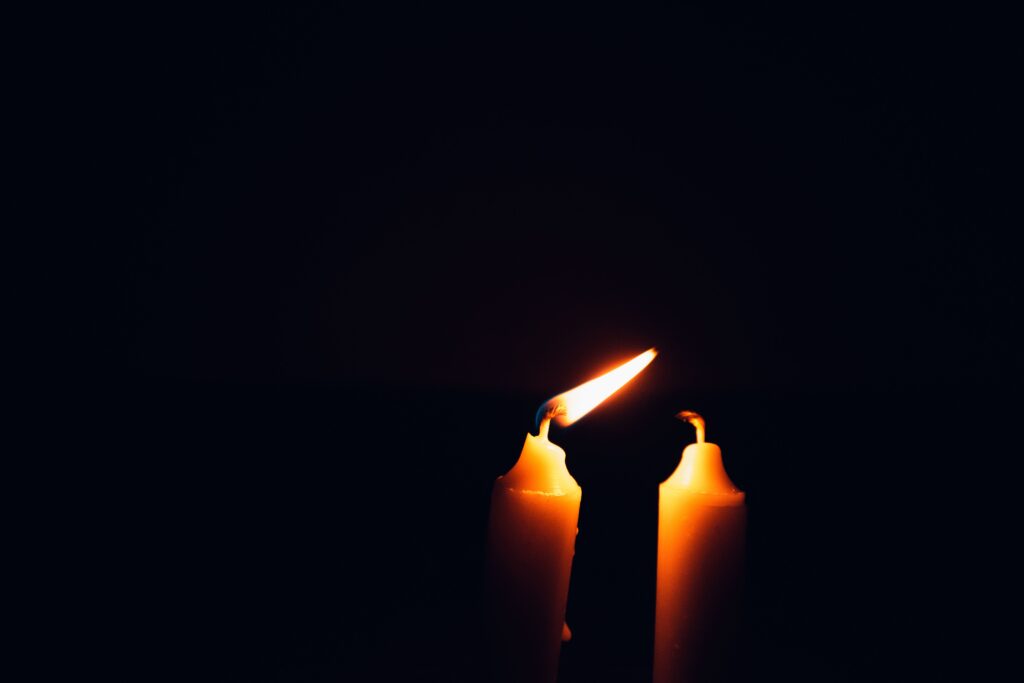
One moment does not move intact into the next. Still, the next moment would not be what it is without the conditions established before it. A flame can light another flame without becoming an unchanged substance that jumps between them. A seed disappears in its original form, yet the tree cannot be separated from the conditions the seed helped establish.
The future being is therefore not simply the same person wearing a different body. Nor is that being completely unrelated to this life. What continues is not an unchanging self. What continues is unfinished conditioning.
The question that follows
If unfinished conditioning provides continuity, what keeps those conditions active? What carries the cycle from one life to another? And if the cycle depends on conditions, can those conditions end? Part 2 turns to craving, grasping, karma, and the possibility of liberation.
Series navigation
Part 2 will be published on August 9, 2026. Add the Part 2 URL here after publication.
Watch the Full Reflection
📺 Watch on YouTube: