Author: quietspacehub

  • 사람이 죽으면 의식은 어떻게 되는가?

    초기불교가 답하지 않은 이유

    사람이 죽으면 의식은 어떻게 될까?

    인간이라면 누구나 한 번쯤 던져 보았을 질문이다.

    고대 인도에서도 수많은 수행자와 철학자들이 이 질문을 탐구했고, 사람들은 이 질문을 석가모니에게도 직접 물었다.

    그런데 초기불교의 기록을 살펴보면 의외의 사실을 발견하게 된다.

    석가모니는 죽은 뒤 의식이 어떤 상태에 있는지 구체적으로 설명하지 않았다.

    왜 그랬을까?

    왜 석가모니는 사후 의식을 설명하지 않았을까?

    사람들은 석가모니에게 다음과 같은 질문을 던졌다.

    • 여래는 죽은 뒤 존재하는가?
    • 존재하지 않는가?
    • 존재하면서 동시에 존재하지 않는가?
    • 존재하지도 않고 존재하지 않지도 않은가?

    당시 인도 철학에서는 존재 문제를 이렇게 묻는 것이 일반적이었다.

    그러나 석가모니는 이러한 질문에 대해 명확한 답을 주지 않았다.

    그 이유는 단순했다.

    그것이 괴로움의 소멸과 직접 관련이 없기 때문이다.

    그는 몰라서 답하지 않은 것이 아니라 의도적으로 답하지 않았다.

    수행의 핵심은 사후세계에 대한 이론을 만드는 것이 아니라 괴로움의 원인을 이해하고 그것을 끝내는 데 있다고 보았기 때문이다.

    죽으면 모든 것이 끝난다는 뜻인가?

    많은 사람들은 여기서 오해한다.

    석가모니가 사후 의식을 설명하지 않았으니 죽으면 모든 것이 끝난다고 본 것 아니냐는 것이다.

    그러나 그것도 아니다.

    초기불교는 분명히 재생을 이야기한다.

    석가모니는 반복해서 말한다.

    “갈애는 다시 태어남으로 이끈다.”

    갈애란 끊임없이 무언가를 붙잡고자 하는 목마름 같은 마음이다.

    조건이 존재하면 다시 태어남도 존재한다.

    즉 죽음으로 모든 것이 완전히 단절된다고 가르친 것은 아니다.

    불꽃의 비유가 말하는 것

    한 등불의 불꽃이 다른 등불에 옮겨 붙는다.

    그 불은 같은 불일까?

    아니면 완전히 다른 불일까?

    초기불교의 대답은 흥미롭다.

    같지도 않고 완전히 다른 것도 아니다.

    석가모니는 존재의 이어짐을 설명할 때 이 비유를 사용했다.

    이는 영혼이 이동한다는 뜻도 아니고, 모든 것이 완전히 사라진다는 뜻도 아니다.

    존재는 조건에 의해 이어진다.

    초기불교는 이를 조건적 연속성으로 설명한다.

    의식은 실체가 아니라 과정이다

    초기불교에서 의식은 독립된 실체가 아니다.

    의식은 조건에 의해 발생한다.

    조건이 있으면 생겨나고, 조건이 사라지면 사라진다.

    따라서 초기불교가 던지는 핵심 질문은 이것이다.

    “죽은 뒤 의식은 어떤 상태인가?”

    보다

    “의식이 계속 생겨날 조건이 남아 있는가?”

    가 더 중요하다.

    윤회는 영혼의 이동인가?

    초기불교는 영혼이 몸을 떠나 다른 몸으로 들어간다고 설명하지 않는다.

    대신 다음과 같은 구조를 말한다.

    • 갈애
    • 집착
    • 업
    • 무지

    이것들이 미래 존재의 씨앗이 된다.

    경전에서는 이를 다음과 같이 비유한다.

    • 업은 밭이다.
    • 의식은 씨앗이다.
    • 갈애는 습기다.

    조건이 갖추어지면 다시 존재가 발생한다.

    윤회는 영혼의 이동이라기보다 조건이 반복되는 구조에 가깝다.

    독화살의 비유

    석가모니는 유명한 비유를 하나 들었다.

    어떤 사람이 독화살을 맞았다.

    그런데 그는 치료를 받기 전에 다음을 먼저 알고 싶어 한다.

    • 누가 화살을 쏘았는가?
    • 활은 무엇으로 만들어졌는가?
    • 화살촉은 어떤 재질인가?

    그렇게 시간을 보내는 동안 그는 치료받지 못하고 죽게 될 것이다.

    석가모니는 사후세계에 대한 끝없는 논쟁도 이와 비슷하다고 보았다.

    그 질문들이 반드시 무의미한 것은 아니지만,

    그 질문에만 매달리면 정작 괴로움을 끝내는 일은 놓칠 수 있다는 것이다.

    초기불교가 진짜 중요하게 본 것

    그래서 그의 가르침은 사후세계 연구가 아니라 현재의 마음 관찰로 향한다.

    • 걷고 있을 때 걷는 줄 알라.
    • 앉아 있을 때 앉아 있는 줄 알라.
    • 숨을 들이쉴 때 들이쉬는 줄 알라.
    • 느낌이 있을 때 느낌을 알라.
    • 마음이 있을 때 마음을 알라.

    수행의 목적은 자동적으로 반복되는 반응 구조를 보는 것이다.

    접촉이 있고,

    느낌이 생기고,

    갈애가 생기고,

    집착이 생기고,

    ‘나’라는 감각이 형성된다.

    알아차림은 바로 이 흐름을 비추는 빛이다.

    결론: 의식보다 중요한 질문

    초기불교가 남긴 가장 흥미로운 점은 사후세계에 대한 상세한 설명이 아니다.

    오히려 지금 이 순간의 마음을 관찰하라는 요청이다.

    죽은 뒤 의식이 어디로 가는가보다 더 중요한 것은,

    지금 이 순간 의식이 어떤 조건에 의해 끊임없이 만들어지고 있는가를 이해하는 일일지도 모른다.

    어쩌면 석가모니가 답하지 않은 이유도 바로 여기에 있었을 것이다.


    ▶ 관련 영상 보기

  • Where Do Thoughts Come From? A Quiet Inquiry Into Awareness

    Every human being experiences thoughts.

    Memories appear unexpectedly.
    Plans for tomorrow arise on their own.
    A fear, an idea, or a random image can suddenly enter the mind.

    But have you ever paused to ask a simple question?

    Where do thoughts come from?

    Most of us are so occupied by the content of thinking that we rarely examine the process itself.

    Yet if we observe carefully, something interesting begins to reveal itself.


    The Moment Before a Thought Appears

    Before every thought, there is a brief moment of silence.

    A thought is not visible one second.

    Then suddenly it is there.

    It may be a memory from years ago.
    It may be a concern about the future.
    It may be a completely unexpected idea.

    The question is:

    Did you consciously choose that thought?

    Or did it simply appear?

    When examined closely, many thoughts seem to arrive on their own.


    Thoughts Move Like Clouds

    Thoughts often resemble clouds moving through an open sky.

    They appear.

    They change.

    They disappear.

    No thought remains forever.

    Yet something else remains present throughout the entire process.

    There is an awareness that notices each thought as it comes and goes.

    This awareness does not need to create the thought in order to observe it.

    It simply notices.


    Are We Really the Thinker?

    Most people assume:

    “I am the one who thinks.”

    But this assumption becomes interesting when we investigate it directly.

    Can you predict your next thought?

    Can you decide exactly what thought will arise ten seconds from now?

    Or does the next thought reveal itself before any conscious choice is made?

    This question has been explored not only in contemplative traditions but also in philosophy and modern cognitive science.


    The Space Between Thoughts

    When thoughts are observed without immediately following them, their nature begins to change.

    They lose some of their urgency.

    They become events occurring within awareness rather than instructions that must be obeyed.

    And occasionally something becomes noticeable.

    Between one thought and the next, there is a brief stillness.

    A silent space that has always been present.

    Most people overlook it because attention is constantly captured by the next thought.

    Yet this stillness may be more fundamental than the thoughts themselves.


    A Quiet Experiment

    The next time a thought appears, do not rush to follow it.

    Pause for a moment.

    Simply notice:

    • Where did this thought come from?
    • Did I choose it?
    • What was present before it appeared?

    No belief is required.

    Only observation.

    The answer may not be found through thinking.

    It may be discovered through awareness itself.


    Final Reflection

    Thoughts come and go.

    Memories come and go.

    Ideas come and go.

    Yet awareness remains.

    Perhaps the deepest question is not where thoughts come from, but what it is that quietly notices them.


    Watch the Full Video

    Watch the original Quiet Space video:


    ← Back to Reflections Archive

  • What Happens to Consciousness After Death? Why the Buddha Refused to Explain

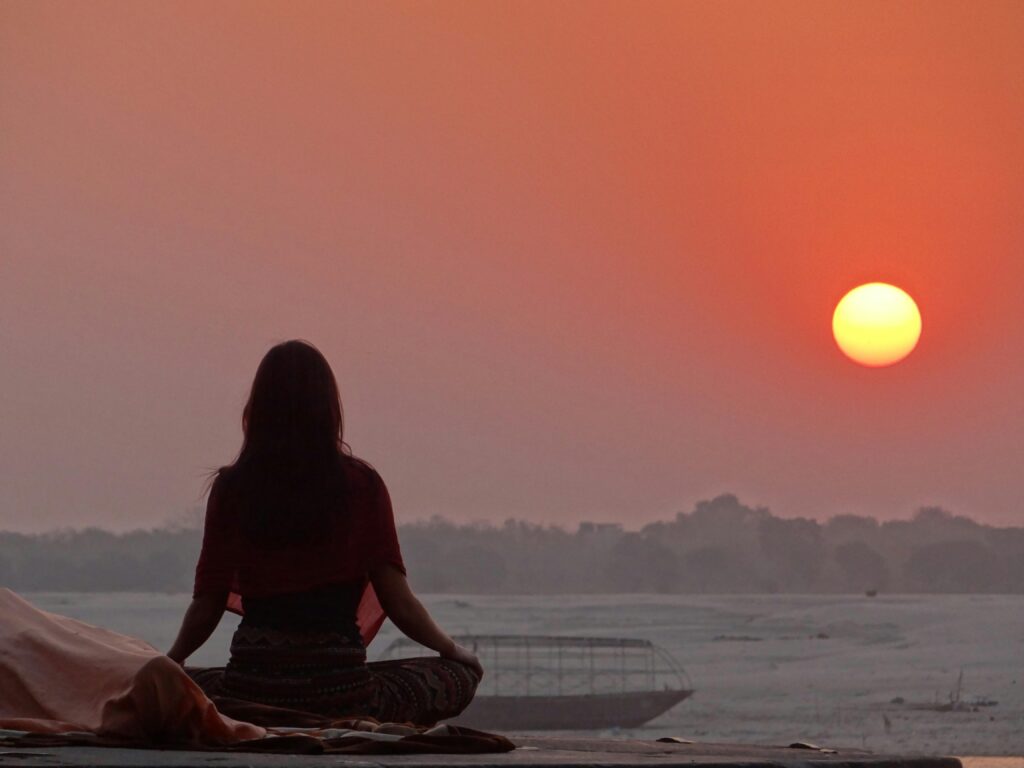
    Person meditating at sunset contemplating consciousness after death

    For thousands of years, human beings have asked the same question:

    What happens to consciousness after death?

    Ancient India was no different. Philosophers, seekers, and spiritual teachers debated this question endlessly, and many people asked the Buddha directly.

    Yet the Buddha’s response was surprising.

    Why Did the Buddha Refuse to Answer Questions About the Afterlife?

    People asked whether an awakened person exists after death, ceases to exist, both exists and does not exist, or transcends all such descriptions.

    The Buddha refused to answer.

    He explained that these questions do not lead to the end of suffering.

    His silence was not a sign of ignorance. Rather, it reflected a deliberate focus on what helps liberate the mind from suffering.

    Did the Buddha Believe Everything Ends at Death?

    Not exactly.

    The Buddha repeatedly taught rebirth. However, he did not describe rebirth as the migration of an eternal soul.

    He taught continuity without a permanent self.

    Craving leads to renewed existence. Where conditions exist, becoming arises.

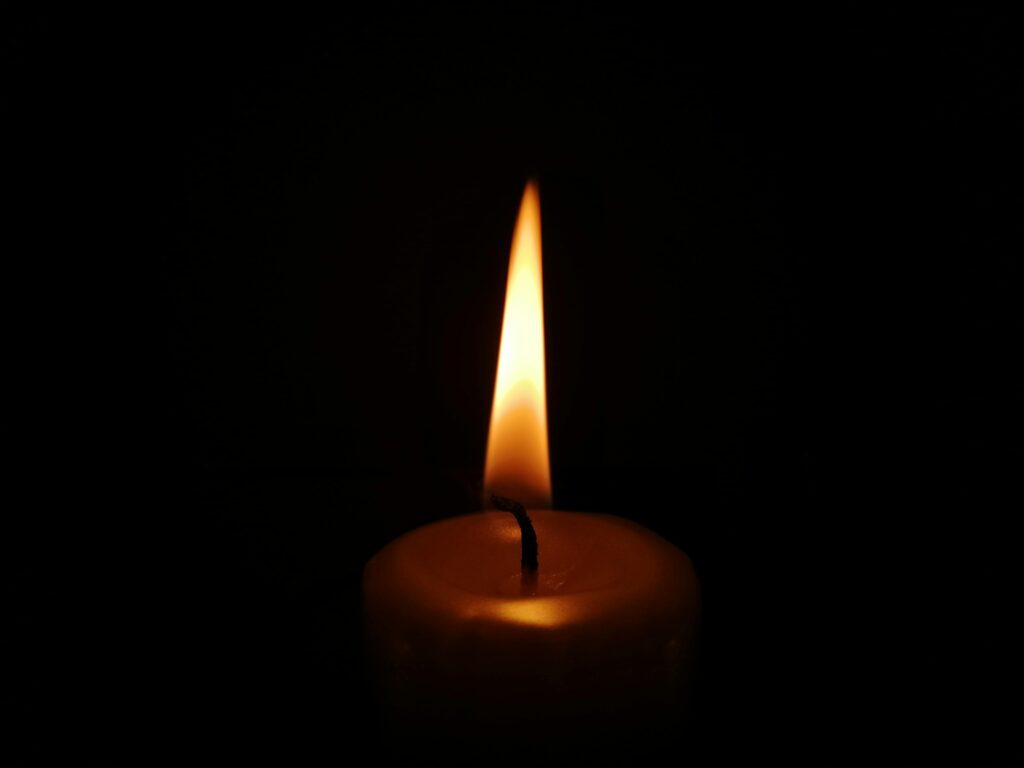
    Candle in darkness symbolizing awareness and impermanence

    The Candle Analogy: Continuity Without a Permanent Self

    The Buddha used a famous image.

    One candle lights another candle.

    Is the second flame the same flame?

    Not exactly.

    Is it completely different?

    Not exactly.

    This analogy points to continuity without identity. Something continues, but not a fixed self moving through time.

    What Continues After Death According to Early Buddhism?

    According to early Buddhist teachings, what continues is not a soul but a process.

    Consciousness itself is conditional. It arises when causes and conditions come together.

    The deeper question is not:

    “What happens to consciousness after death?”

    Instead, Buddhism asks:

    “Do the conditions that generate suffering and continued existence still remain?”

    The Conditions That Sustain Rebirth

    The Buddha identified several key conditions:

    • Craving
    • Attachment
    • Ignorance
    • Habitual patterns of mind

    These conditions become the fuel for repeated becoming.

    A traditional Buddhist formula expresses this symbolically:

    • Karma is the field
    • Consciousness is the seed
    • Craving is the moisture

    When these conditions are present, existence continues.

    When Does Rebirth End?

    The Buddha taught that when craving completely ceases, rebirth also ceases.

    This shifts the focus away from speculation and toward direct transformation.

    The goal is not to construct theories about the afterlife but to understand the causes of suffering here and now.

    Meditative silhouette representing inner observation and awareness

    The Parable of the Poisoned Arrow

    To explain this point, the Buddha offered a famous example.

    A man is struck by a poisoned arrow.

    Before allowing treatment, he demands to know who shot it, what the bow was made from, and many other details.

    The Buddha said that such a man would die before receiving help.

    Likewise, becoming obsessed with metaphysical questions can distract us from understanding suffering itself.

    The Real Buddhist Investigation

    Buddhism encourages direct observation:

    • Notice the body.
    • Notice sensations.
    • Notice thoughts.
    • Notice craving as it appears.

    Suffering is not merely philosophical.

    It is structural.

    It is psychological.

    It is repetitive.

    According to the Buddha, freedom begins when this entire mechanism is clearly seen.

    Final Reflection

    The Buddha did not provide a detailed map of the afterlife.

    Instead, he pointed to the causes of suffering and the possibility of liberation.

    For early Buddhism, the most important question is not what happens after death.

    The most important question is whether the conditions that perpetuate suffering are still operating in this very moment.

    One reason this question continues to fascinate human beings is that it touches our deepest fear and curiosity.

    We want certainty about what happens after death because we seek permanence and security.

    Yet early Buddhist teachings suggest that freedom does not come from obtaining final answers about the future.

    Freedom comes from understanding how attachment, craving, and identification operate in the present moment.

    When these processes are clearly seen, the mind becomes less dependent on beliefs and more capable of direct understanding.

    Perhaps this is why the Buddha repeatedly redirected attention from speculation toward observation.

    The invitation was not to believe, but to see.

    If you enjoyed this exploration of early Buddhist teachings on consciousness and rebirth, you can watch the full video on the Quiet Space YouTube channel for a deeper reflection on awareness, suffering, and the nature of existence.

    Watch the Full Video

    Watch the full video on Quiet Space:

    Related Reading

    Who Is Aware of the Thought? Awareness, Mind and Consciousness

    Where Do Thoughts Come From? A Quiet Inquiry Into Awareness


    ← Back to Reflections Archive