Tag: Reflection

  • Why the Final State of Mind Matters in Buddhism

    Person walking alone toward the horizon at sunset

    Many people wonder what happens in the final moments before death.

    Does the last thought matter?

    Can the final state of mind influence what comes next?

    Early Buddhism approaches these questions in a subtle and thought-provoking way.

    Rather than viewing death as a sudden event, Buddhist teachings describe consciousness as an ongoing process. Moment after moment, the mind reacts to experience through desire, fear, attachment, memory, and habit.

    From this perspective, the final moment of life is not separate from the rest of life.

    It reflects the patterns that have been repeated again and again over many years.

    This idea is central to Buddhist psychology.

    The mind is not seen as a permanent self.

    It is a dynamic process continually shaped by conditioning.

    A fearful mind tends to return to fear.

    An attached mind tends to return to grasping.

    An angry mind easily returns to anger.

    The mind naturally leans toward what it has practiced most often.

    For this reason, the final state of consciousness is not viewed as random.

    Nor is it a single moment of judgment.

    It is the continuation of a direction that has already been established.

    This helps explain why Buddhist practice places such emphasis on awareness in daily life.

    Person practicing mindfulness meditation outdoors

    Observe thoughts.

    Observe desire.

    Observe fear.

    Observe attachment.

    Not because these experiences are wrong, but because understanding them changes our relationship with them.

    Whatever we repeatedly cultivate gradually becomes the landscape of the mind.

    Fear strengthens fear.

    Attachment strengthens attachment.

    And awareness strengthens awareness.

    Seen in this way, the question of death becomes inseparable from the question of how we live.

    The final moment may not be determined by what happens at the very end.

    It may reflect what has been practiced throughout a lifetime.

    Buddhist teachings take this insight even further.

    They suggest that when craving and attachment are completely understood and released, the cycle of becoming itself comes to an end.

    Whether one accepts this literally or symbolically, the teaching points toward a deeper inquiry.

    Perhaps the most important question is not:

    “What will happen when I die?”

    Perhaps the deeper question is:

    “What kind of mind am I building right now?”

    Because the final moment of consciousness may simply reveal the direction the mind has been following all along.


    Watch the Video

    This reflection is based on a video originally published on the Quiet Space YouTube channel.

    Watch the full video here:

  • What Happens to Consciousness Right Before Death?

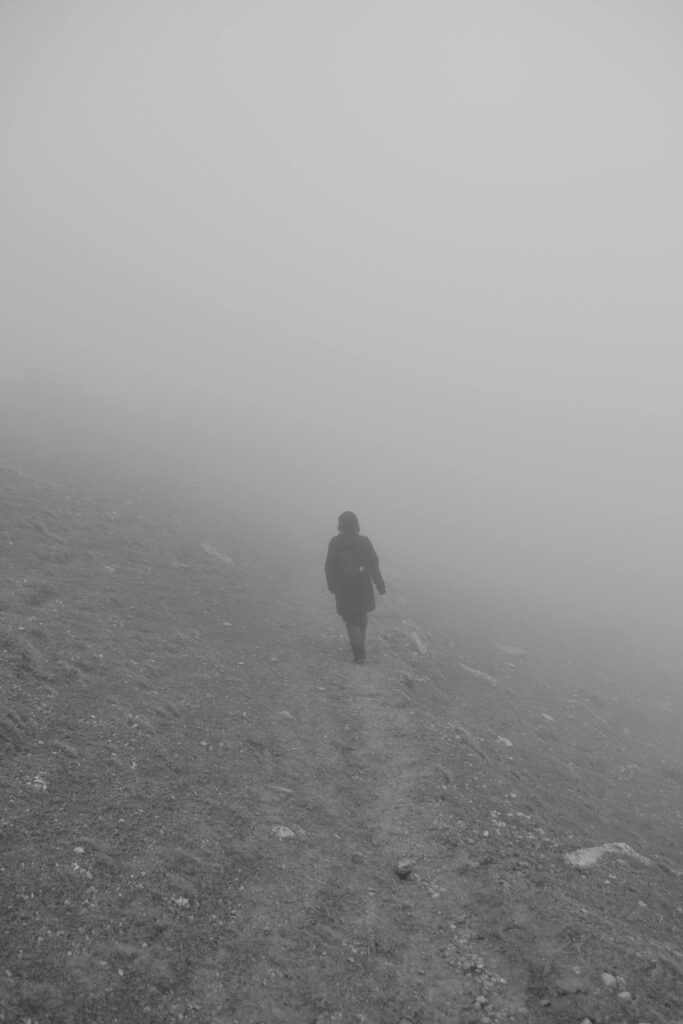
    Person walking alone along a quiet path

    Death is often imagined as a single event.

    A final moment.

    A dividing line between life and whatever comes next.

    But early Buddhist teachings invite us to look at death in a very different way.

    Rather than focusing on dramatic descriptions of the afterlife, the Buddha directed attention toward something much closer: the workings of consciousness itself.

    What happens to the mind when life comes to an end?

    According to Buddhist thought, the final moments of life are not separate from the rest of our experience.

    They are deeply connected to the habits, reactions, attachments, and fears that have been cultivated throughout a lifetime.

    The mind does not suddenly become something different at death.

    It tends to continue moving according to familiar patterns.

    This perspective rests on a fundamental Buddhist insight.

    Consciousness is not viewed as a permanent soul or fixed identity.

    Instead, it is understood as a dynamic process shaped by causes and conditions.

    Moment after moment, the mind reacts.

    It grasps.

    It resists.

    It desires.

    It fears.

    And through these repeated patterns, our experience of reality is continuously shaped.

    From this perspective, death is not entirely separate from life.

    It is the continuation of the same momentum that has been operating all along.

    If the mind has spent years caught in craving, fear, resentment, or attachment, those tendencies do not simply disappear in the final moment.

    But if awareness has been cultivated, the structure of experience begins to change.

    This helps explain why Buddhist practice places such importance on observation.

    Person sitting quietly in meditation

    Observe the breath.

    Observe sensations.

    Observe desire as it arises.

    Observe fear.

    Observe attachment.

    Not to suppress them, but to understand them.

    The Buddha taught that much of human suffering is not created by external circumstances alone.

    It is generated internally through automatic reactions that operate beneath conscious awareness.

    Attachment was often compared to fuel.

    The more tightly the mind clings to identity, memory, desire, and fear, the more the cycle of becoming continues.

    This leads to a profound question.

    What if the most important preparation for death is not something that happens at the end of life?

    What if it is happening right now?

    Every moment of unconscious craving strengthens old patterns.

    Every moment of awareness weakens them.

    This is why mindfulness was never intended as mere relaxation.

    It was a way of seeing the machinery of suffering directly.

    And according to Buddhist teaching, freedom begins when that machinery is finally understood.

    Perhaps the question is not only what happens at death.

    Perhaps the deeper question is:

    What kind of mind are we building in this moment?

    Watch the Video

    This reflection is based on a video originally published on the Quiet Space YouTube channel.

    Watch the full video here:


  • The Universe Is Not One

    Star-filled night sky above a distant landscape

    Most of us live with an assumption so familiar that we rarely question it.

    We assume that there is only one universe.

    One reality.

    One world that contains everything that exists.

    But how certain can we be?

    Throughout history, many traditions have described a reality far larger than ordinary perception suggests.

    Ancient teachings, spiritual traditions, and historical records often speak of multiple worlds existing simultaneously.

    In these descriptions, humanity is not placed at the center of existence.

    Instead, human experience is presented as only one small part of a much larger reality.

    Today, such ideas are often viewed as mythology, symbolism, or metaphor.

    Perhaps they are.

    Yet it is worth asking whether dismissal is always the same as understanding.

    History offers many examples of ideas that were once considered impossible simply because they did not fit within existing knowledge.

    Person gazing at the night sky in contemplation

    Human understanding has always been shaped by the limits of perception.

    We tend to recognize what we are prepared to recognize.

    And what lies beyond those boundaries is often ignored, rejected, or explained away.

    This does not mean that every ancient claim is true.

    Nor does it mean that unseen worlds necessarily exist.

    But it does invite humility.

    Can we really be certain that what we perceive is all that exists?

    Modern science continues to reveal realities that were once invisible.

    Entire galaxies remained unknown.

    Microscopic worlds existed long before we learned how to observe them.

    Much of reality became visible only when new ways of seeing became available.

    Perhaps the same principle applies more broadly.

    If reality is layered rather than singular, if different dimensions or forms of existence coexist, then our ordinary experience may represent only a small fraction of a much larger whole.

    Whether such possibilities are ultimately true is not the purpose of this reflection.

    The purpose is simply to pause and question our assumptions.

    To recognize that certainty is not always the same as knowledge.

    And to remain open to the possibility that reality may be far more mysterious than we imagine.

    Sometimes the most meaningful inquiry begins not with answers, but with a willingness to ask deeper questions.

    What if reality is larger than we think?

    What if there is more than we are currently able to perceive?

    And what becomes possible when we admit that we do not yet know?


    Watch the Video

    This reflection is based on a video originally published on the Quiet Space YouTube channel.

    Watch the full video here:

  • What Remains Without Thinking?

    Person quietly watching the sunset

    Most of us spend our lives immersed in thought.

    Plans, memories, worries, opinions, judgments, and endless inner conversations fill the mind from morning until night.

    Because thinking is so constant, we rarely stop to ask a simple question:

    What remains when thinking becomes quiet?

    Occasionally, there are brief moments when thought slows down on its own.

    Perhaps while watching a sunset.

    Listening to music.

    Walking in nature.

    Or simply sitting quietly for a moment.

    There is no need to force it.

    The mind settles naturally, and a small gap begins to appear.

    Many people immediately try to fill that gap with another thought.

    Yet if we remain with it, something interesting can be noticed.

    The absence of thought does not feel like the absence of existence.

    We are still here.

    The world is still here.

    Sounds are heard.

    Colors are seen.

    Life continues.

    What disappears is not awareness itself, but the constant mental commentary about experience.

    This raises an important question.

    If awareness remains when thoughts become quiet, could awareness be more fundamental than thought?

    We often assume that thinking creates our sense of self.

    Yet direct observation suggests something different.

    Thoughts appear within awareness.

    Thoughts disappear within awareness.

    But awareness itself remains present throughout both.

    Open sky with slowly moving clouds

    Like clouds passing through the sky, thoughts come and go.

    The sky does not need to follow them.

    It simply remains open.

    In the same way, awareness does not need to hold onto every thought that appears.

    It quietly allows each one to come and go.

    Perhaps this is why moments of stillness can feel surprisingly peaceful.

    For a brief moment, there is nothing to defend, nothing to become, and nowhere to arrive.

    There is only simple presence.

    The next time thinking slows down, resist the urge to immediately search for the next thought.

    Pause.

    Notice what remains.

    You may discover that what you are is not created by thinking.

    And that beneath every thought, a quiet awareness has been here all along.

    Watch the Video

    This reflection is based on a video originally published on the Quiet Space YouTube channel.

    Watch the full video here:


  • You Are Not the Voice in Your Head

    Person standing quietly in contemplation

    There is a voice that seems to speak inside the mind.

    It comments on what we see, reacts to what happens, and constantly tells stories about who we are.

    Most of the time, we rarely question it.

    The voice feels familiar.

    It feels personal.

    It feels like “me.”

    But is it?

    If we observe carefully, something interesting begins to appear.

    The voice is never the same from one moment to the next.

    Sometimes it is calm.

    Sometimes anxious.

    Sometimes encouraging.

    Sometimes critical.

    Its opinions change. Its stories change. Its moods change.

    Yet we often assume that this constantly changing voice represents our true identity.

    This raises an important question:

    How can something so unstable be what we truly are?

    The inner voice is made of thoughts, and thoughts are not permanent.

    A memory appears.

    A worry follows.

    A plan begins to form.

    Thoughts arrive without invitation and disappear without asking permission.

    If we pay close attention, we may notice something even more surprising.

    We do not consciously create the next thought.

    Instead, we become aware of it after it appears.

    The voice may seem like one continuous stream, but it is actually made up of countless separate thoughts arising and fading moment by moment.

    Like clouds moving across the sky, thoughts appear connected, yet each one is temporary.

    And while thoughts constantly change, something else remains.

    Clouds drifting across an open sky

    There is an awareness that notices every thought.

    It observes without judgment.

    It does not argue.

    It does not need to defend itself.

    It simply knows.

    This awareness is not the voice.

    It is what hears the voice.

    When this distinction becomes clear, the inner dialogue begins to lose some of its authority.

    Thoughts are no longer commands that must be obeyed.

    They become events that can be observed.

    The voice is still there, but it no longer defines who we are.

    Perhaps the most important discovery is not learning how to silence the voice.

    Perhaps it is realizing that we were never the voice to begin with.

    We are the awareness in which the voice appears.

    And in that simple recognition, something quiet begins to open.

    Watch the Video

    This reflection is based on a video originally published on the Quiet Space YouTube channel.

    Watch the full video here:


  • Where Do Thoughts Come From?

    Have you ever noticed how a thought suddenly appears?

    Person quietly observing the sky and clouds

    One moment there is silence.

    The next moment, a memory, a worry, a plan, or an opinion arrives in the mind.

    Most of us spend our lives thinking without ever pausing to ask a simple question:

    Where did that thought come from?

    Did we consciously choose it?

    Or did it simply appear on its own?

    If we observe carefully, thoughts seem to arise much like clouds moving across an open sky.

    They appear.

    They change.

    They disappear.

    Yet something remains present throughout the entire process.

    There is an awareness that notices each thought as it comes and goes.

    This observation invites a deeper question.

    We often assume that we are the thinker.

    But can we actually find the moment when we decide what the next thought will be?

    Can we deliberately choose the very next thought before it appears?

    Or does the thought arrive first, with the sense of choosing coming afterward?

    These questions are not merely philosophical. They point toward direct experience.

    When we begin observing thoughts instead of immediately identifying with them, something subtle changes.

    Thoughts lose some of their authority.

    They become events occurring within awareness rather than commands that must be followed.

    A memory appears.

    A worry appears.

    A judgment appears.

    And each one can simply be noticed.

    Between thoughts there is often a brief gap.

    A quiet stillness.

    Still lake reflecting the sky

    Most of the time we overlook it because our attention is captured by the next thought.

    Yet that stillness may be just as important as the thoughts themselves.

    The next time a thought arises, try not to follow it immediately.

    Pause.

    Observe.

    Notice how it appears without invitation and eventually fades away.

    In that simple observation, the mind may begin to feel less solid than it once seemed.

    And perhaps we discover that what we truly are is not the movement of thought itself, but the awareness in which thought appears.

    Watch the Video

    This reflection is based on a video originally published on the Quiet Space YouTube channel.

    Watch the full video here: