
Tag: Identity

  • A Story About Consciousness, Death, and Becoming

    A Story About Consciousness, Death, and Becoming

    For thousands of years, humanity has searched for answers to one profound question:

    What happens after death?

    Some traditions speak of an eternal soul. Others believe that everything simply disappears.

    Early Buddhism offers a remarkably different perspective.

    Instead of asking where consciousness goes after death, it invites us to look more closely at how consciousness is continually shaped in every moment of life.

    Every attachment leaves a trace.

    Every fear strengthens another habit.

    Every act of kindness changes the mind.

    Every moment of awareness opens another possibility.

    Perhaps becoming is not something that begins after death.

    Perhaps it is happening right now.

    This changes the way we understand life itself.

    Instead of asking only what happens after death, we begin asking:
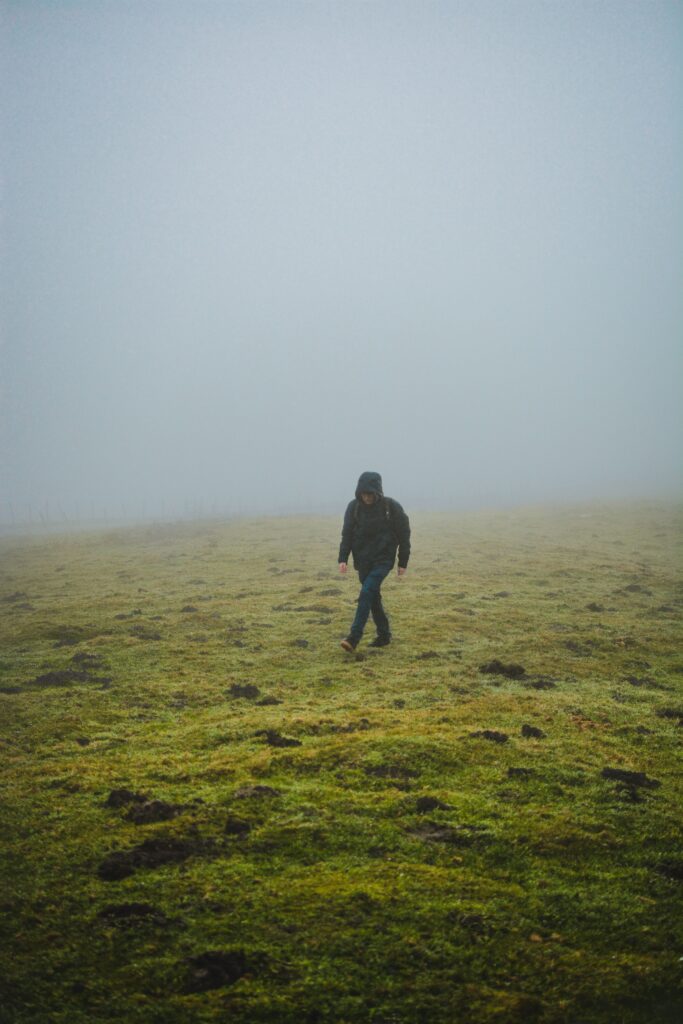
    A solitary figure walking through morning mist, symbolizing the quiet journey of consciousness, change, and becoming.

    Who am I becoming in this very moment?

    The Buddha repeatedly turned attention away from speculation and toward direct observation.

    Observe the mind.

    Observe attachment.

    Observe craving.

    Observe fear.

    Not to judge them—but to understand them.

    Because understanding changes the direction of consciousness.

    Perhaps freedom is not somewhere else.

    Perhaps it begins the moment the mind no longer needs to cling.

    The mystery of consciousness remains.

    Science continues exploring.

    Philosophy continues asking.

    Meditation continues observing.

    Perhaps no single tradition possesses every answer.

    Yet together they remind us of something deeply human:

    Right now, we are always becoming someone.


    Watch the Full Reflection

    🎧 Watch on YouTube:


    This Quiet Reflection explores consciousness, becoming, awareness, attachment, and the quiet transformation of the human mind through calm narration and reflective atmosphere.



    ← Back to Reflections Archive

  • Brain vs Consciousness: What Buddhism and Neuroscience Still Cannot Fully Explain

    Brain vs Consciousness: What Buddhism and Neuroscience Still Cannot Fully Explain

    For centuries, human beings have tried to understand one of the deepest mysteries of all:

    Consciousness.

    Today, neuroscience studies consciousness through observation, measurement, and experiment.

    More than two thousand years ago, Buddhism approached the same mystery in a very different way.

    Not through machines.

    Not through laboratories.

    But through direct observation of the mind itself.

    At first glance, these two approaches seem completely different.

    Yet some of their conclusions are surprisingly close.

    Modern neuroscience increasingly suggests that the self is not a fixed entity.

    The brain is constantly changing.

    Thoughts change.

    Memories change.

    Emotions change.

    Even our sense of identity changes over time.

    What we call “self” appears less like a permanent thing and more like an ongoing process.

    This idea may sound familiar to students of Buddhism.

    The Buddha repeatedly questioned the existence of a permanent self.

    If the body changes,

    if feelings change,

    if thoughts change,

    what exactly remains unchanged?

    Both neuroscience and Buddhism point toward a similar observation:

    The mind is dynamic.

    Experience is constantly unfolding.

    And what we call identity may be far less solid than it appears.

    There is another fascinating overlap.

    Both recognize the power of habitual patterns.

    Neuroscience speaks of neural pathways.

    Buddhism speaks of conditioning, craving, and attachment.

    Different languages.

    Yet both suggest that repeated patterns shape the way we experience reality.

    But despite these similarities, a major difference remains.

    A person quietly watching the night sky over the ocean, reflecting on the mystery of consciousness.

    Neuroscience generally assumes that consciousness depends upon the brain.

    When brain activity ends, consciousness ends.

    At least, that is the dominant scientific view today.

    Early Buddhism approaches the question differently.

    The Buddha did not clearly define consciousness as simply a product of the brain.

    Nor did he fully explain what happens after death.

    Instead, he left certain questions unanswered.

    Not because they were unimportant,

    but because he believed they did not lead directly to the end of suffering.

    As a result, the relationship between consciousness and the brain remains an open question in this conversation.

    And perhaps this is where both traditions become most interesting.

    Despite extraordinary advances in neuroscience, consciousness remains one of science’s greatest mysteries.

    How does subjective experience arise?

    Why does awareness exist at all?

    How does matter become experience?

    No one fully knows.

    The mystery remains.

    Perhaps Buddhism and neuroscience are not opponents.

    Perhaps they are exploring the same landscape from different directions.

    One studies consciousness from the outside.

    The other studies it from the inside.

    And maybe both perspectives still have something important to teach us.

    Because consciousness may be humanity’s most unfinished question.


    Watch the Video


    ← Back to Reflections Archive

  • You Are Not the Voice in Your Head

    Person standing quietly in contemplation

    There is a voice that seems to speak inside the mind.

    It comments on what we see, reacts to what happens, and constantly tells stories about who we are.

    Most of the time, we rarely question it.

    The voice feels familiar.

    It feels personal.

    It feels like “me.”

    But is it?

    If we observe carefully, something interesting begins to appear.

    The voice is never the same from one moment to the next.

    Sometimes it is calm.

    Sometimes anxious.

    Sometimes encouraging.

    Sometimes critical.

    Its opinions change. Its stories change. Its moods change.

    Yet we often assume that this constantly changing voice represents our true identity.

    This raises an important question:

    How can something so unstable be what we truly are?

    The inner voice is made of thoughts, and thoughts are not permanent.

    A memory appears.

    A worry follows.

    A plan begins to form.

    Thoughts arrive without invitation and disappear without asking permission.

    If we pay close attention, we may notice something even more surprising.

    We do not consciously create the next thought.

    Instead, we become aware of it after it appears.

    The voice may seem like one continuous stream, but it is actually made up of countless separate thoughts arising and fading moment by moment.

    Like clouds moving across the sky, thoughts appear connected, yet each one is temporary.

    And while thoughts constantly change, something else remains.

    Clouds drifting across an open sky

    There is an awareness that notices every thought.

    It observes without judgment.

    It does not argue.

    It does not need to defend itself.

    It simply knows.

    This awareness is not the voice.

    It is what hears the voice.

    When this distinction becomes clear, the inner dialogue begins to lose some of its authority.

    Thoughts are no longer commands that must be obeyed.

    They become events that can be observed.

    The voice is still there, but it no longer defines who we are.

    Perhaps the most important discovery is not learning how to silence the voice.

    Perhaps it is realizing that we were never the voice to begin with.

    We are the awareness in which the voice appears.

    And in that simple recognition, something quiet begins to open.

    Watch the Video

    This reflection is based on a video originally published on the Quiet Space YouTube channel.

    Watch the full video here:


    ← Back to Reflections Archive