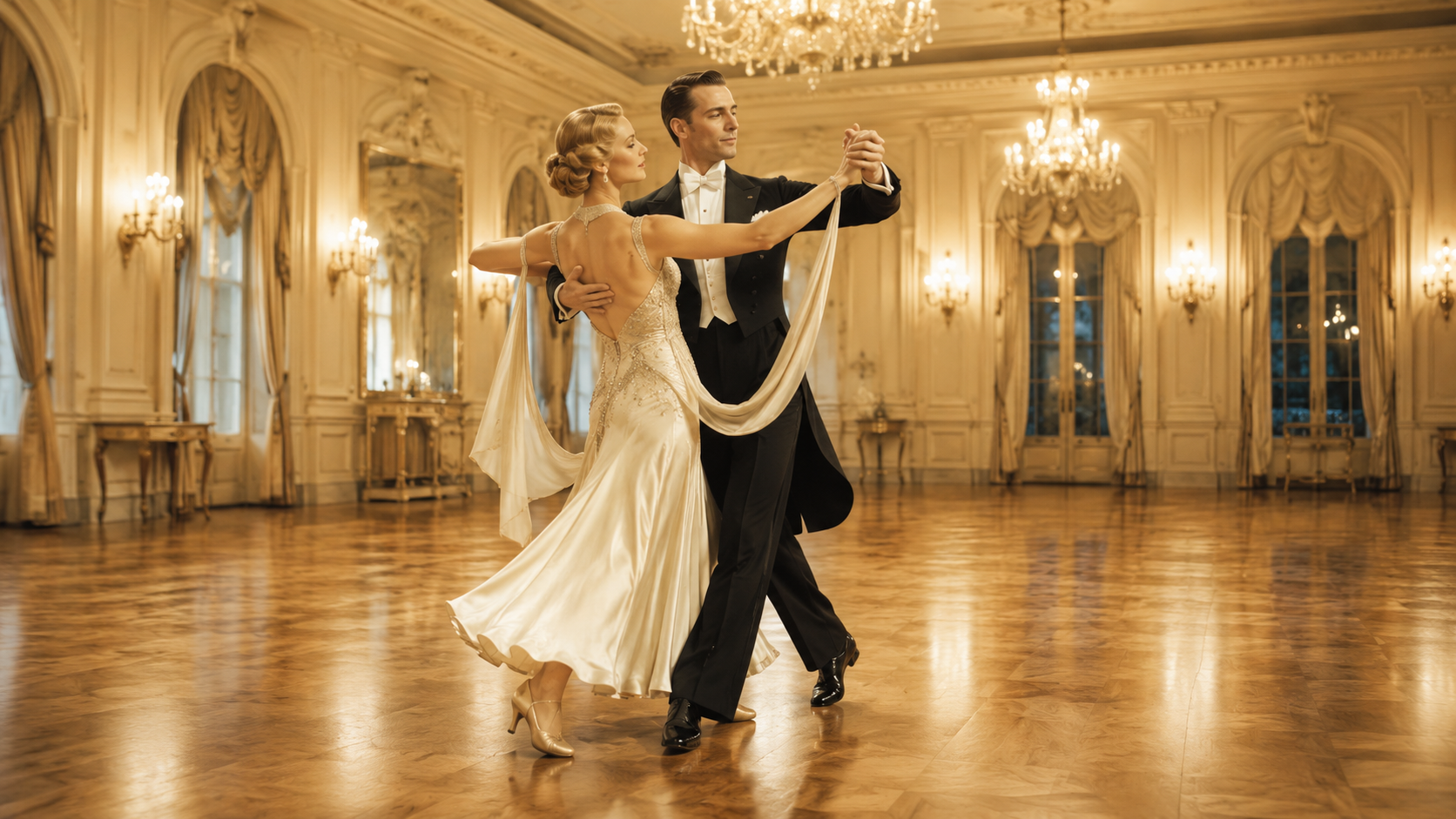
Discover the history and character of Quick Step through a 57-minute orchestral collection filled with buoyant rhythm, elegant movement, and the timeless atmosphere of the ballroom.
Quick Step: Where Speed Learns Elegance
Quick Step is one of the brightest and most energetic dances in the ballroom tradition. It moves quickly, yet its finest performances never look hurried. The dancers seem to float across the floor, carried by a rhythm that is lively, polished and full of optimism.
The Quick Step Ballroom Dance Collection from Quiet Space Music presents 57 minutes and 52 seconds of orchestral dance music inspired by that distinctive character. It is a musical journey through light footsteps, graceful turns and the enduring elegance of the ballroom.
How Quick Step Began
The history of Quick Step is closely connected with the social dancing and popular music of the 1920s.
Foxtrot had already become internationally popular during the previous decade. As jazz and dance-band music grew faster and more rhythmically adventurous, dancers began combining the flowing movement of Foxtrot with elements drawn from Charleston, Peabody, One-Step and other lively social dances.
These influences produced an energetic form sometimes known as Quick Time Foxtrot or Quick Time Foxtrot and Charleston. The slower form of Foxtrot gradually developed its own smooth and measured identity, while the faster form followed a different path and became Quick Step.
British dancers and teachers refined the new dance during the 1920s. By 1927, it had acquired a more recognizable structure and was being standardized as a partnered ballroom dance. British ballroom conventions developed further toward the end of that decade and eventually became the basis of what is now known internationally as the International Style.
Quick Step therefore carries two complementary traditions within it. Its flowing progression across the floor reveals its relationship with Foxtrot, while its lively footwork and playful energy preserve something of Charleston and early jazz-age dancing.
Today, Quick Step is one of the five International Standard ballroom dances, alongside Waltz, Tango, Viennese Waltz and Slow Foxtrot.
What Makes Quick Step Distinctive?
The name immediately suggests speed, but Quick Step is not simply a matter of moving as fast as possible.
Its real character comes from the contrast between rapid footwork and a calm, elegant upper body. The couple maintains a poised ballroom frame while travelling across the floor through walks, turns, chassés, lock steps and running actions.
Advanced choreography may include hops, skips and syncopated movements, but they should not make the dance look heavy or frantic. Even during its most energetic passages, Quick Step aims to create an impression of buoyancy.
The dancers move quickly, yet appear light on their feet. They cover a large area of the ballroom, yet their movement remains controlled. This balance between speed and refinement gives Quick Step its unmistakable charm.
A successful Quick Step often seems easier than it truly is. Beneath its cheerful surface lie precise timing, coordination, stamina and a finely maintained connection between partners.
The Musical Character of Quick Step
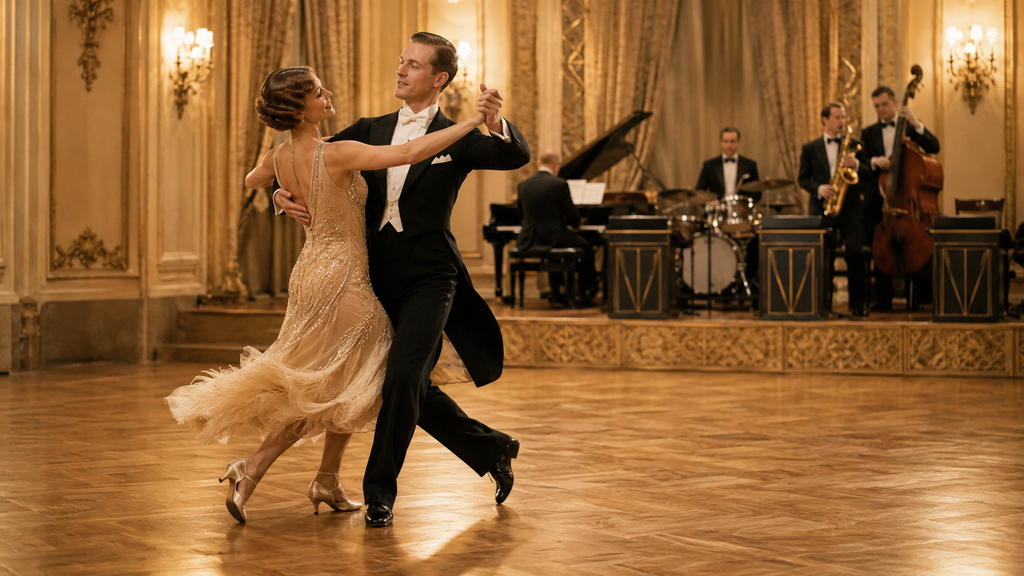
Quick Step is generally danced to bright 4/4 music with a strong forward pulse. Jazz, swing, big-band colour and traditional dance-orchestra writing all belong naturally to its musical world.
The rhythm must provide enough clarity for fast movement while remaining smooth enough to support long travel across the floor. A good Quick Step arrangement does not merely push the dancers forward. It gives them space to rise, turn, accelerate and glide.
Brass can add sparkle and confidence. Woodwinds provide wit and lightness. Strings bring sweep and elegance, while piano, bass and percussion maintain the buoyant rhythmic foundation.
This makes orchestral Quick Step music especially rewarding even when no one is dancing. The listener can still sense the movement: an approaching couple, a polished turn, a sudden change of direction and a joyful flight beneath the chandeliers.
From the Jazz Age to the Modern Ballroom
Quick Step emerged during an age fascinated by movement. Cities were growing, popular entertainment was changing, and jazz was transforming how people experienced rhythm.
The dance absorbed that sense of modern speed, but the ballroom gave it discipline and form. What began as a lively meeting of popular dances gradually became a technically refined international style.
Its social and competitive forms are not identical. Competitive Quick Step may display greater speed, larger movement and more athletic figures, while social dancers can enjoy a simpler vocabulary adapted to the available floor.
Both forms, however, preserve the same central feeling: cheerful momentum shaped by elegance.
That is why Quick Step has survived long beyond the decade that created it. It belongs to the Jazz Age, but it does not remain trapped there. Each new orchestra, dancer and listener can rediscover its brightness.
A 57-Minute Orchestral Journey
This Quiet Space Music collection approaches Quick Step through orchestra music rather than through instruction or competition.
Across 57 minutes and 52 seconds, the arrangements explore different shades of the dance: formal entrances, sparkling chandeliers, midnight promenades, swift turns and moments when the ballroom seems almost weightless.
The individual pieces vary in melody and colour, but they share a continuous spirit of movement. Some passages feel playful and urbane. Others suggest a grand hotel ballroom, an evening reception or a nearly empty floor waiting for the first couple to begin.
The collection can accompany dance practice, but it is equally suited to reading, working, relaxing or simply enjoying the warmth of vintage-inspired orchestral music.
Listening Beyond the Steps
You do not need to know Quick Step figures to enjoy Quick Step music.
Listen first for the forward-moving pulse. Then notice how the melody remains graceful above it. Brass and percussion may suggest the liveliness of the feet, while the strings create the sensation of travelling smoothly through space.
That relationship between rhythm and melody mirrors the dance itself. The feet are busy, but the overall image remains composed. Energy is present everywhere, yet elegance governs it.
Perhaps this is the enduring lesson of Quick Step: joy does not have to abandon refinement, and speed does not have to become haste.
Ballroom Dance Memories
Ballroom Dance Memories is a Quiet Space Music series devoted to the individual musical worlds of classic ballroom dances.
Each collection preserves the character of its dance through original orchestral music. Quick Step brings lightness, optimism and polished movement to the series—a ballroom in which every step seems to invite another.
Enter the hall, follow the rhythm and let the orchestra carry you across the floor.
📺 Watch the complete Quick Step Ballroom Dance Collection on our YouTube channel, Quiet Space Music, and continue your journey through the Ballroom Dance Memories series.