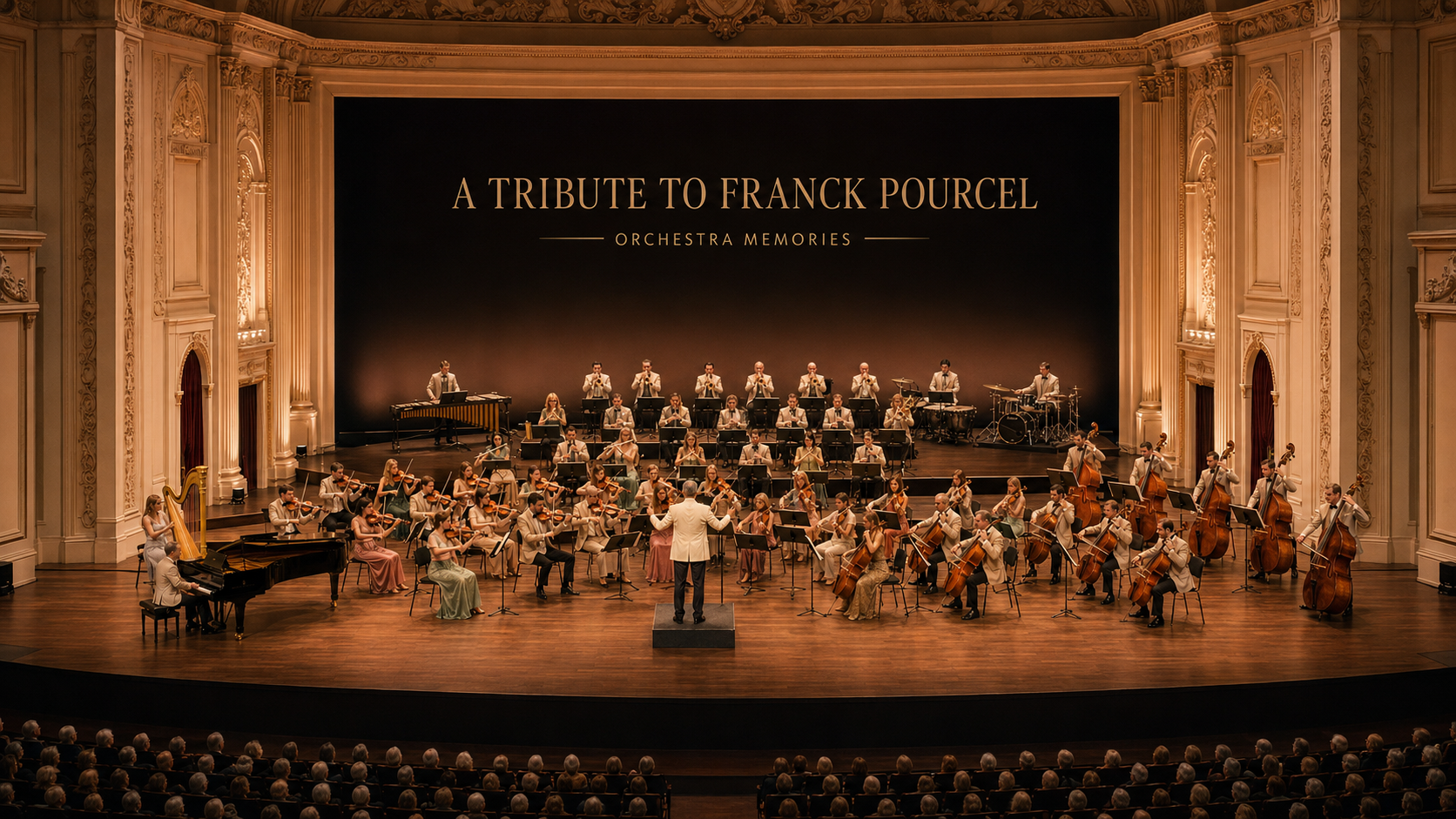
Franck Pourcel carried the elegance of French orchestral music far beyond Paris, bringing refined orchestral performances to concert halls, television broadcasts, and international music festivals throughout Europe and beyond.
Renowned for his lyrical string arrangements, graceful conducting style, and unmistakable French musical elegance, he became one of the defining orchestral figures of the twentieth century.
Whether leading his own orchestra or conducting prestigious international festivals, his performances reflected precision, warmth, and timeless sophistication.
His music continues to inspire listeners through its balance, beauty, and enduring sense of romance.
The Sound
Franck Pourcel created an orchestral language built on lyrical strings, delicate woodwinds, warm brass, and beautifully balanced arrangements.
Rather than overwhelming the listener with dramatic effects, every melody unfolded naturally with elegance, clarity, and emotional warmth.
His orchestra demonstrated how refinement and accessibility could exist together, allowing orchestral music to become part of everyday life while preserving the dignity of the concert hall.
His unmistakable French style continues to inspire Quiet Space Original Music—creating orchestral performances filled with grace, romance, and timeless beauty.
The Concert Experience
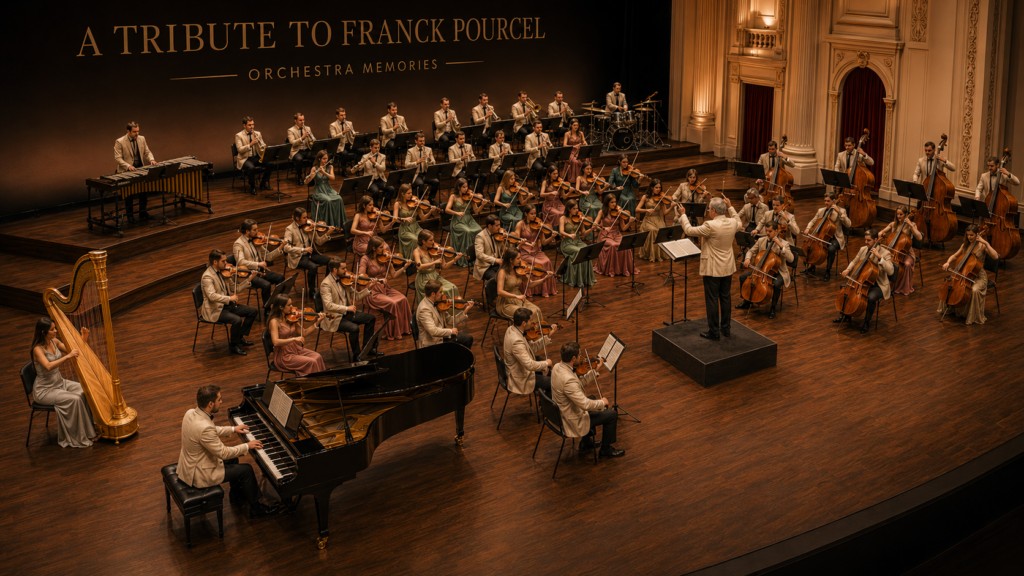
Franck Pourcel’s concerts reflected the golden age of European broadcasting, international festivals, and beautifully crafted orchestral performances.
Whether appearing on French television, recording in renowned studios, or conducting prestigious international events such as the Sanremo Festival, he carried the unmistakable elegance of French orchestral tradition around the world.
His orchestra became known for polished ensemble playing, expressive string sections, and an atmosphere where refinement always served the melody.
Those performances continue to represent one of the most graceful chapters in twentieth-century orchestral history.
Legacy
Franck Pourcel became one of the defining ambassadors of French orchestral music during the golden age of easy listening.
His graceful conducting, refined orchestral arrangements, and unmistakable French musical elegance introduced audiences around the world to a style that balanced classical discipline with lyrical beauty.
His timeless recordings, including Dolannes Mélodie, I Will Follow Him (Chariot), Love Story, Lara’s Theme, La Reine de Saba, and numerous television and festival performances, established him as one of Europe’s most respected orchestra leaders.
Beyond the concert hall, Franck Pourcel became a familiar presence through international television broadcasts and prestigious music festivals, including his memorable appearances at the Sanremo Music Festival. His performances demonstrated that orchestral music could remain elegant, expressive, and deeply human while reaching audiences across cultures and generations.
Today, his legacy continues to inspire conductors, arrangers, and listeners around the world, reminding us that true musical refinement is built on melody, balance, and timeless artistry.
Discover the Inspiration
Some orchestras entertained.
Some orchestras celebrated.
Franck Pourcel represented elegance.
His orchestra reflected the golden era of European television, international festivals, and beautifully crafted orchestral performances.
From Paris to Sanremo and beyond, his refined conducting style united classical discipline with popular melody, allowing orchestral music to reach audiences across generations.
His performances remind us that true musical elegance is never bound by time or place.
That timeless spirit continues to inspire Quiet Space Original Music—creating orchestral performances filled with refinement, warmth, and lasting beauty.
His international performances carried the elegance of Paris to concert halls around the world, representing an era when European orchestral music became a universal language of refinement and romance.
🎵 Quiet Space Original Music
Inspired by the timeless elegance of the Franck Pourcel Orchestra.
▶ Listen on YouTube →